April 2008 page 7 Updates

9 April

Field Goose Hunting - Safety First

Field goose hunting from layout blinds with decoys placed close to the blinds is a an effective technique to decoy geese into very close range, but requires acknowledgment of safety from start to finish of each hunt.

A photo of 4 layout blinds tightly surrounded with Canada goose decoys. The hunters are well hidden and the decoys look so realistic, they attract road hunters with rifles. Blaze orange is highly recommended to wave at vehicles that stop or slow down or to wear while putting out and bringing in the decoys.


Coming up from your back to shoot with other hunters close by is awkward and must be done with safety in mind each time. Also, while climbing in and out of the blinds, safeties should always be checked and muzzle control must always be priority.

Field goose hunting is like all types of hunting, its hit and miss and a lot of work, but very exciting when the birds commit.

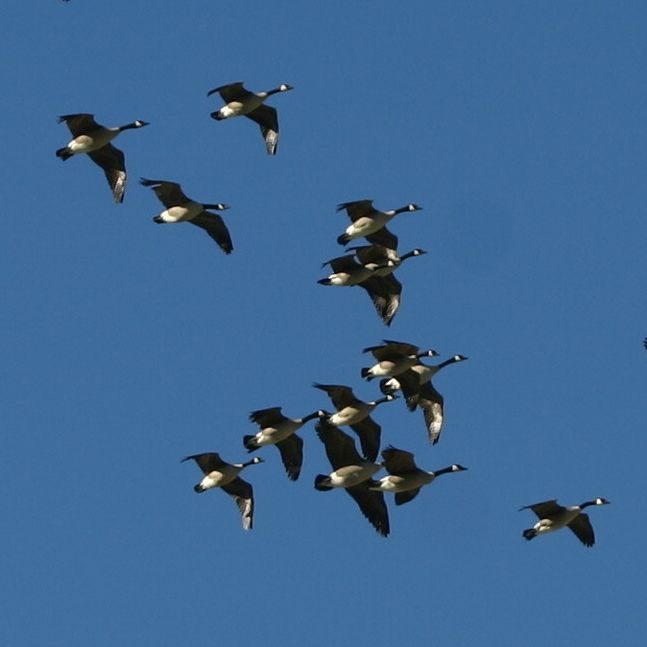
The size of Canada geese is misleading in relevance to the speed of their flight. Close range misses are common to a lot of hunters, novice and skilled alike.

The number of youth hunters has drastically declined over the past 20 years. We encourage responsible young men to hunt with the Association such as the group in the photo above, but adult supervision is required for family dependents.


A side note is that while youth numbers are down, the adult waterfowl hunter is the largest growing segment of the Association membership.


Costs

There are more influences that pressures higher hunting lease land costs than just hunters. The more landowners earn for their acreage for farming and the more farmers have to pay for farm services the idea transcends the more money they should get for a hunting lease. Recognizing this idea is without logic from the hunter's perspective as the land we lease within any one farm is not the crop acreage and its associated costs, but rather the non-farmed ground, the hunter is left wondering why he must pay more as fertilizer costs mean nothing for his hunt quality. Your Association agrees and has not renewed and refused some landowner offers to lease their land for having unrealistic lease value expectations relative to the quality of the wildlife habitat.


We are in a period of increasing costs and until they plateau leasing land will be more time consuming with fewer leases written.


An illustration of a farm cost influence.


Custom Rates Increasing, Apr 8, 2008, by Kent Thiesse, Corn & Soybean Digest.

"... custom rates for farm work in 2008 are listed at 5-10% above the rates a year earlier..."


Surveyed Harvesting Grain Costs:
Corn combine – $28.10/acre ($38/acre with grain cart and truck)
Soybean combine – $27.10/acre ($34.40/acre with grain cart and truck)
Small grain combine – $25.30/acre

Add to the above costs per acre that for fertilizer, tillage, planting and pest/weed spraying. Additionally, equipment purchasing, operating and repair costs as well as harvest storage costs drive the famer price per acre higher. If hunters had just to pay the isolated low cost of $25.30 per acre shown above to hunt how many acres would that hunter hunt? A single 1/4 section of land, 1/2 by 1/2 mile square at 160 acres would cost $4,048.00. One third that price is prohibitive to the majority of the average hunters.
 

Another perspective came by chance from a member:

"...If any one ever gripes about the cost of membership my local hunting club in the Northern part of Virginia has a basic fee of about $480 which grants you rifle hunting, then $75 for crossbow, $145 for archery, $250 for muzzleloader, $185 for waterfowl...All that comes up to $1035 per year to hunt every thing with 600 acres in Southern Maryland and 3000 in Northern Virginia..."


Ag Prices

Some influences that show that farm costs have yet to settle down include:

A shortfall in soybean seed for 2008 spring planting. And, corn input costs have reached a higher than last year level increasing greater than that for most other grains.

"...prices sit at $11.97 a bushel [soybean], up 57 percent from a year ago, while wheat prices have risen 112 percent in the past year, resting at $9.29 a bushel..."

Farmers adjust to record corn prices, by Frank Konkel, Sentinel-Standard, April 7, 2008

April 2008 page 1 2 3 4 5 6 7 8 9 10 11 12 13 14 15 16 17 18 19 20


Update Archive


Kansas

Iowa

Missouri


Deer

Turkey

Upland Bird

Waterfowl