![]()
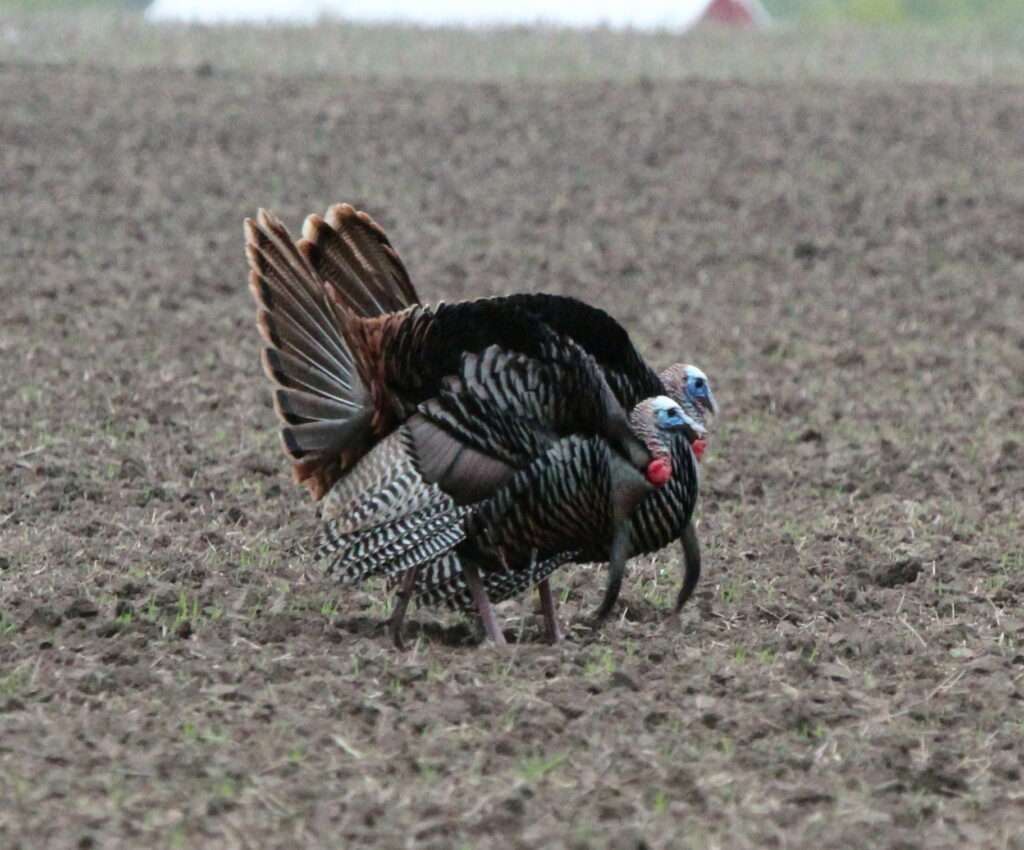
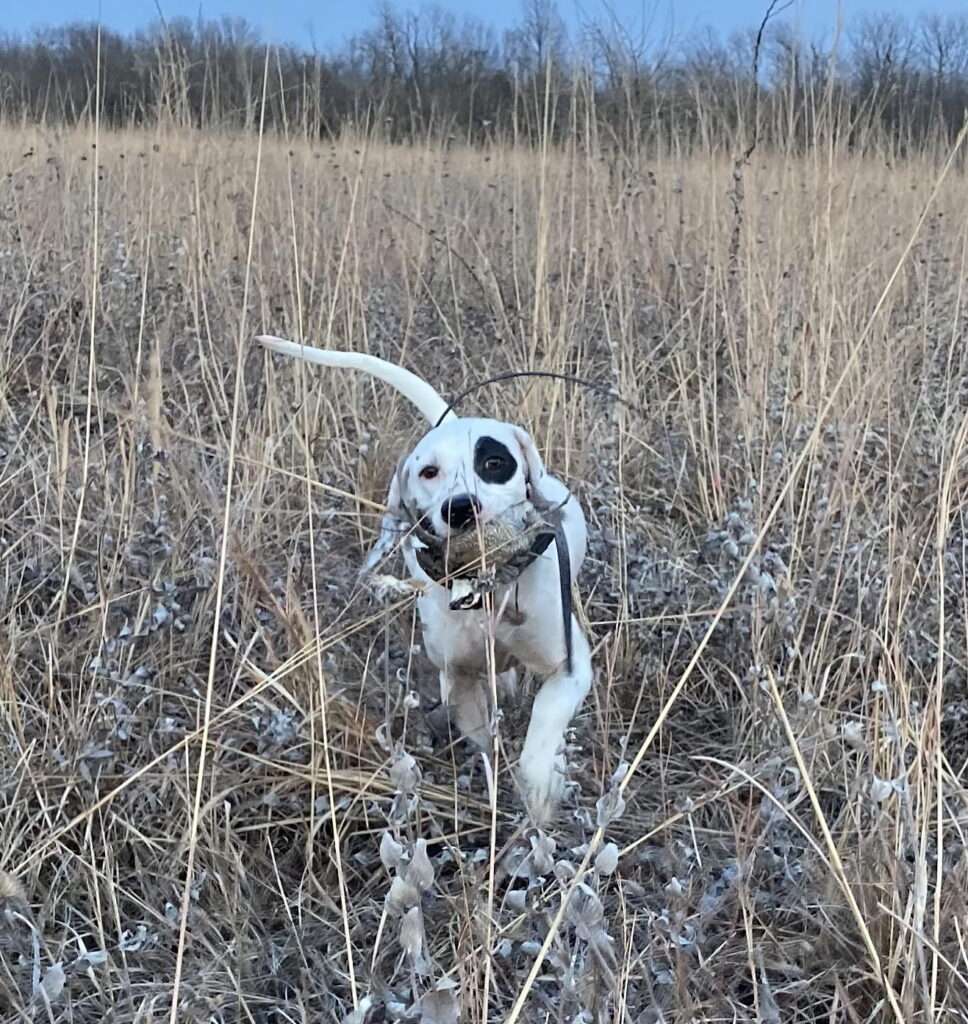
30 December QuailLibby held this point for a good amount of time. When we walked in 2 big toms took off out the back side. When we dropped our guard a nice covey slipped us through the trees with their speed.
Libby pointing a covey on the fifth farm of the day.
We ended up hunting 5 farms and found four coveys. We shot 7 birds and did not follow singles to give the birds a break since the weather was turning bad.
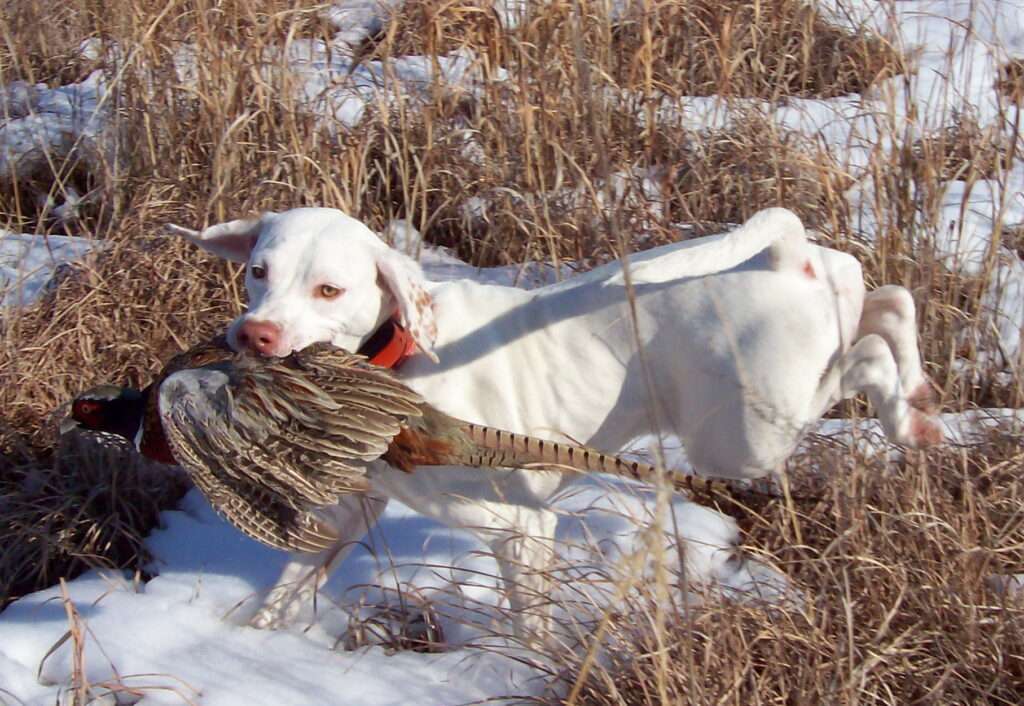
TJ and Libby were both on point at the same time. We went in on Libby and flushed a covey. PJ stayed on point through the covey rise and shooting and held a single that must have strayed from the covey.
FarmingHigher wheat prices could linger, by Phyllis Jacobs Griekspoor, The Wichita Eagle, Dec. 29, 2007
Barron's: Don't Bet The Farm, 12/29/2007, Cattle Network, Dow Jones Newswires. "The catalysts in the farmland bubble are federal subsidies to ethanol producers and the belief that ethanol demand will keep rising and that China's and India's new wealth will keep boosting global commodity prices. Indeed, U.S. farmers are switching to corn from other crops, curbing supplies of food grains.
Nationwide, from 2002 to 2007, the number of acres on which corn was planted rose 24%, to 86.1 million. And the energy bill recently signed by President Bush and strongly backed by both parties mandates that oil refiners eventually boost ethanol use as a gasoline additive to 36 billion gallons a year from the current seven billion gallons. Aided by a drought that reduced food exports from Australia, net U.S. farm income will hit a record $87.5 billion this year...
Steve Leuthold no longer owns farmland he picked up for a song in the last bust. Leuthold, chief investment officer of Leuthold-Weeden Investment Capital in Minneapolis, sees ominous parallels between today's boom and those of the 1970s and 1980s, which saw farm prices soar...His main concern is that the ethanol boom rests on shaky economic underpinnings....Recently, construction on three proposed U.S. plants was halted amid a growing oversupply of the fuel...while cheaper than gasoline, it contains less energy than that fuel, producing lower mile-per-gallon readings and forcing motorists to refuel more frequently...
The U.S. share of the global corn market, now about 60% or 70%, is headed to 55% or 60%, says the USDA....
The most imminent threat is the housing meltdown. Leuthold says that, historically, a convulsion in one part of the realty market eventually has affected all others. In the agricultural sector, ranchland and recreational farmland already have been quietly hit, having peaked in 2006, according to brokers...Recreational plots, bought by sportsmen, have also tanked, he adds."
Loss of CRP land worries state's wildlife officials..., Dec 29 2007, Sioux Falls, S.D. (AP). "About 300,000 South Dakota acres that had been dedicated to growing native vegetation are coming out of the C-R-P program and likely will be planted to crops. In a couple years, about 800,000 acres in the state could be removed from the federal program."
Recent history has seen South Dakota maintained around 1.5 million CRP acres per year with generally a 1/3 on any year allowed for drought or programmed haying or grazing leaving the rest to wildlife. If 800,000 acres come out of CRP and go to crop production with the remaining CRP acreage having the same 1/3 factor in drought or programmed haying or grazing on any year, the well known South Dakota pheasant hunting linked to tall grass acreage will be greatly attenuated. There would be only 469,000 private suitable hunting acres in contiguous CRP. Far less than what is presently stretched to support the current hunter load even half way into the season. Ducks are expected to fair worse.
This decline in large contiguous CRP acreage is also reflected in the new Jewell, Sherman and Kiowa County MAHA land in irrigation corner wildlife ground. This isolated and spaced cover may very well be the future of the bulk of the huntable tall grass pheasant habitat capable of sustaining reproduction. Those that have hunted the eastern Washington and Oregon States region know full well the value of these isolated cover spots being the prime pheasant cover. While this is a bright spot in the future we do not present these irrigation corner tall grass habitat spots as a replacement for large contiguous CRP fields in terms of bird numbers. They are the best second choice available in the absence of large acreage contiguous CRP.
South Dakota serves as the national bird hunter attention focus on the CRP issue due to its pheasant and waterfowl reproduction capability largely credited to its contiguous CRP acreage. That along with the millions of dollars spent on the South Dakota hunting industry. South Dakota also servers well as a model for what is occurring in other lesser press popular wildlife regions. Part of that model includes second order effects caused by reduced CRP acreage.
Those second order effects include an increasing competition amongst the more effective South Dakota hunt providers seeking to secure as much tall grass hunting land as they can from what remains. Any acreage they acquire for their own hunt operation is that much less for any other hunter.
Another second order effect will be to what is also identified as the "average hunter" or that hunter reliant on less than a Jacuzzi hunt lodge with three meals and airport transportation provided. Those hunters will find less availability of lower cost hunt on your own day hunt operators. This will increase pressure on the limited public hunting lands available.
That effect of less high-quality hunting acreage combined with the competitive mentality that has always accompanied a South Dakota hunt of success determined by bag counts all totals for the best South Dakota hunt will remain the first weekend on public lands and the first two weeks on private. After that period, the hunts will most likely be regulated to released birds and probably limited to the lodge type hunt provider. This may be a bit more dismal than what will come about, however that dismal point of view is the one most captured in general hunter discussions.
Counterpoints to the declining contiguous CRP and hunt quality issue include that there were pheasants before there was CRP. That was true. However, it was true for the same reason as why there were more quail before CRP. The reasons for good bird numbers back then were the less efficient farming practices that left many places of reproductive habitat spread over a large regional area. Additionally, what is also forgotten about during this past period were Raccoon pelts that were bringing $35 each and that fescue and other pioneering introduced ground covers had not displaced ground nesting bird cover.
In memory amongst all the youths and young adults that trapped back then was the competitive nature beyond increased income of comparing to your buddy who made the most money on fur. That drove to buying more traps, running longer lines and of course more pelts. It was a time when two hours before and after school was spent in the creek bottom rather than what is true today on the school ball field.
This was also a time when no one knew what fescue was and when 80 bushel/acre corn was bragging rights compared to the 140+ bushel/acre corn that has become average with many areas having a high frequency of or near 200 bushel/acre corn.
The current analysis is that large contiguous CRP acreage is and will continue to decline for as long as grain crop prices remain strong. And, that is the foreseeable future. Some farmers will retain large contiguous CRP as an income diversification for base line operating costs. Filter strip conservation efforts will bring back a replication of some of the wider crop field edge lines reiminescent of the time of less efficient agriculture. And, the current analysis includes that ground nesting bird hunting will change. That change will be most advertised referenced South Dakota where the rise and fall of its pheasant and duck hunting, and reproductive cover will be concurrent to its income from hunter dollars.
For the MAHA hunter, change will be less dramatic as our bird hunting has never been anchored to the future of contiguous CRP or the bag count, one hunt a year oriented hunter. MAHA will continue to lease available large contiguous CRP acreage, irrigation corners, along with the brush filled draws Kansas provides and the crop edge fields gaining improved quality from the filter strip program. Our pheasant hunts combined with quail will continue to be our drawing factor as it was before the rise and the predicted fall of the South Dakota CRP hunt. Besides all that, the MAHA bird hunter is in it for the quality of season long hunts behind his own bird dogs rather than the once a year South Dakota hunter largely represented by the "Orvis" hunter behind dogs of others. Two entirely different classes of hunters and hunt quality.
November 2007 page 1 2 3 4 5 6 7 8 9 10 11 12 13 14 15 16 17 18 |
|
|
|