![]()
27 July WaterfowlWetlands management can be feast or famine, depending on the mood of mother nature. This year we have seen excessive rainfall on our middle zone leases, but not so much in the north zone.
At this point we're done with everything we can do to enhance the hunting, so our next phase will be to cover, repair and rebuild blinds that were damaged from the floodwater.
We were quickly able to drain Henry C, replant the lake bed and cross our fingers for the best.
The photo of a pot hole that was planted and will be used as a wade-in area. Since it's been so dry the last couple of years the landowner has done a good job keeping the brush down to provide more open areas to hunt.
A view from the NE corner of Henry C facing west. The only thing missing in the photo is blind #1, that has been around for a long time. Fortunately or unfortunately, it was not able to withstand the pressure of the floodwater.
The north end of the lake bed was replanted. Time will tell to see if the seed will take.
A view from the southwest corner of Henry C facing northeast.
The Association's Henry County dinosaur of a duck lake, "Blairstown Lake" hasn't seen water like this in 4 years. Let's hope for the best! It's been a while since we covered the blinds and tripped over spent shells while doing so.
Ag News & HuntingWhile not news to many, the secondary effects of high corn demand and weather effects include driving up prices of other commodities beyond the cost of land and CRP being put back into crop production.
From the Herald Net, Everett Washington, July 26, 2007, Milk Prices, This is becoming an American tragedy: "...Corn is a major part of a cow's diet, and the corn crop is being used by the ethanol market. Ethanol is predicted to use 25-30 percent of this year's crop....Because of the high prices of corn, farmers are planting more corn and less alfalfa...and soybeans. Resulting from this are higher prices on alfalfa...and soybeans....[driving up milk prices as the cost of feeding milk cows increases]..."
From the West Central Tribune Online, Summary Box: Drought deepens in Minnesota, by The Associated Press, Thursday, July 26, 2007: "...The situation is most critical for the state's corn crop. Soybeans and sugar beets can hold out for a while. But the dry weather has already meant less alfalfa and hay, which means higher costs for dairy and beef farmers...."
Talking with some farmers not one at this point would consider any government conservation program. Crop prices all around are giving the farmer a welcomed paycheck. For those that missed earlier discussions about the increasing corn crop and fall hunts see also 5 July Update on standing corn and 12 May on planning.
26 July Dear John, Jon and Shaun,
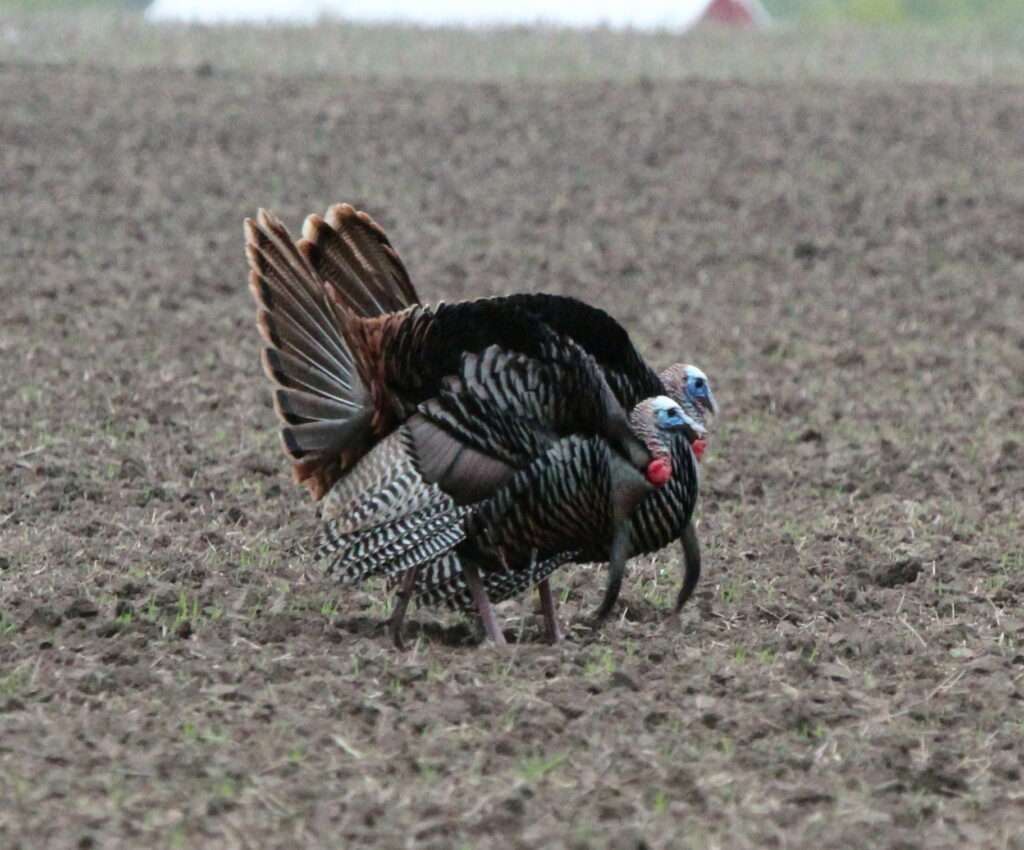
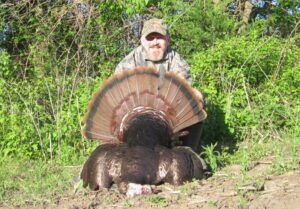
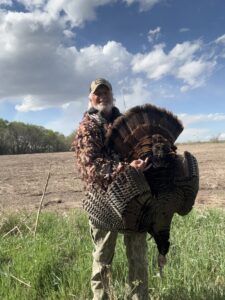
I just wanted to let you know that my hunting partner, Brad, and I just returned from a hunting/scouting trip to many of the farms located in [location deleted] and [location deleted]. Let me tell you…we had a wonderful time! Our hopes were to get maybe a bird each in each state, and get a leg up on the upcoming deer season. Well…we more than did that! We found some really nice areas that we liked for deer, and scored on 5 different birds – all adult birds, with the smallest being 20 lbs, ¾ spurs and 10 ¾ beard and the largest being 27 lbs, 1 ¼ spurs and 11 inch beard. My Kansas bird had 2 beards, which is something I have always wanted to get. So…if the deer season is any where close to the turkey season…sign us up for life! I know that’s maybe hoping for a lot, but, for 2 Georgia boys, just seeing some Pope and Young bucks will be more than we've seen in awhile. I always say it’s not all about the killing, but it’s about the encounters and that’s what we live for.
Thanks guys for the great feedback, good luck this fall!
BitsWheat We've had numerous calls over the years from upland bird hunters, especially in Kansas, that wonder why we lease green or winter wheat fields. First of all, wheat is part of the crop rotation, so it's in one year and planted to corn, beans or milo the next. The next reason is wheat fields during the months of May, June and July are prime nesting cover for upland birds, especially pheasant.
Many wheat fields are double cropped and no-till planted to beans or the stubble is left until the following spring. In both cases, the beans and wheat stubble are a good food source in the winter, but it takes a year for the process to fall into place.....
Updates The erratic publishing schedule of recent updates is one indicator of the more road time spent working Association leases between spring planting and fall harvest.
Maps Those seeking a final cutoff date for all lease maps to be updated online have missed that the maps on a as required basis have been updated from before spring turkey season for the 2007 - 2008 seasons and all must check for the latest map before any scouting or hunting trip. The maps while if the world was perfect would be "final" before fall seasons fails to reflect that landowners, many of whom are businessmen and not farmers, come to decisions throughout the calendar year and not always in accordance with season dates.
Scouting during off season periods allows liberal access to all lands with few exceptions on each map sheet. During season scouting is to individual numbered farms to insure no one interferes with another's hunt. All scouting requires a telephone reservation. That reservation insures seasonal leases are not violated, scheduled drop land not included and some landowners require the office to notify them when members will be on the ground.
Member Input The flow of member feedback is increasing as we turn toward fall seasons and keep it all coming, the good, the bad, latest input from scouting trips, etc. From all the ground we (MAHA partners) cover it is still the members that cover more at any one time over a larger area. Getting firsthand observations of which landowner is clearing fields, building a house or when a "For Sale" sign shows up all counts to helping the overall effort. Just as equally important are the keep/delete recommendations that get added to the files. Thanks to all that have been sending in their observations.
|
|
|
|