![]()
30 Jun
Any picture of sheds falls short of showing the true rack size. The center one above the brow tine is reported to be thick to the point of having mass more than a man's hand can wrap around.
We have always encouraged pre season scouting as it has the greatest payoff for enhancing any hunter's potential success. The more enjoyable the hunting experience the more likely members are to re-new their membership and that is what we are after. We will keep the name of this hunter to ourselves and we did not ask which property the sheds came from. This is a scouting and hunting on your own organization where each hunter's efforts will payoff directly to each hunters desire to hunt as hard as he wants.
27 Jun
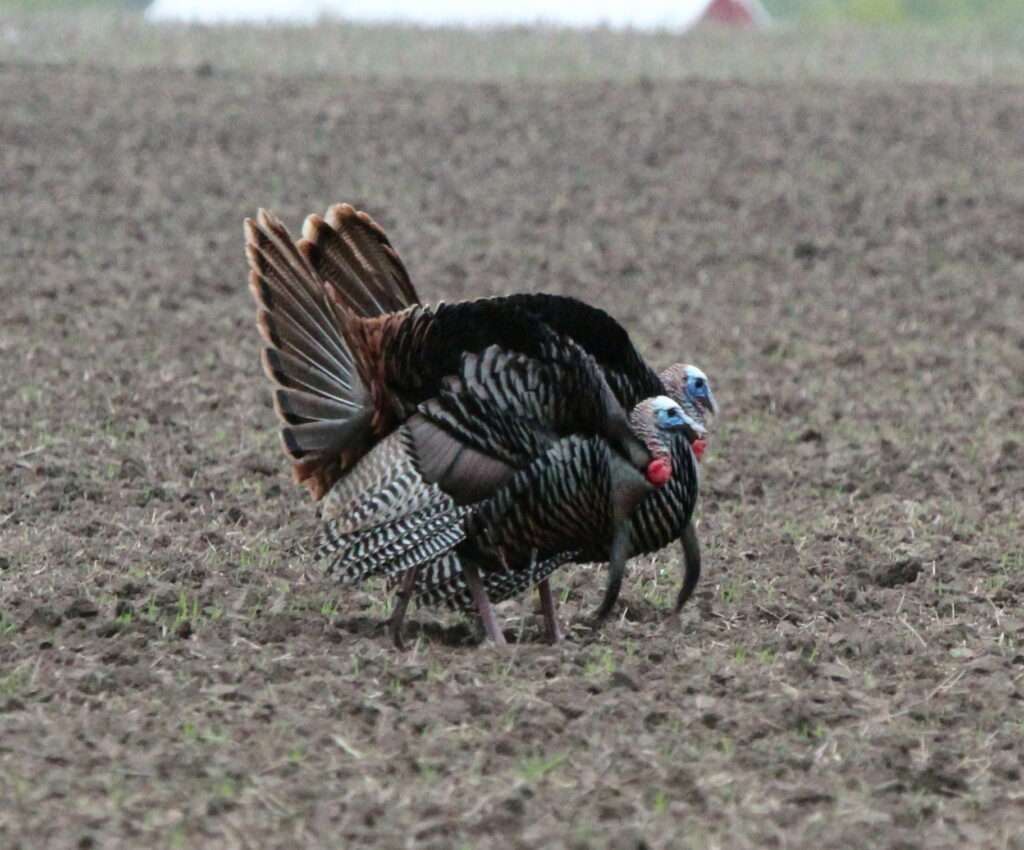
The second seasonal waypoint we observed while out and about are the hen turkeys are grouping up with their offspring. It is typical to see two or more hens with more young in tow than can be accurately counted.
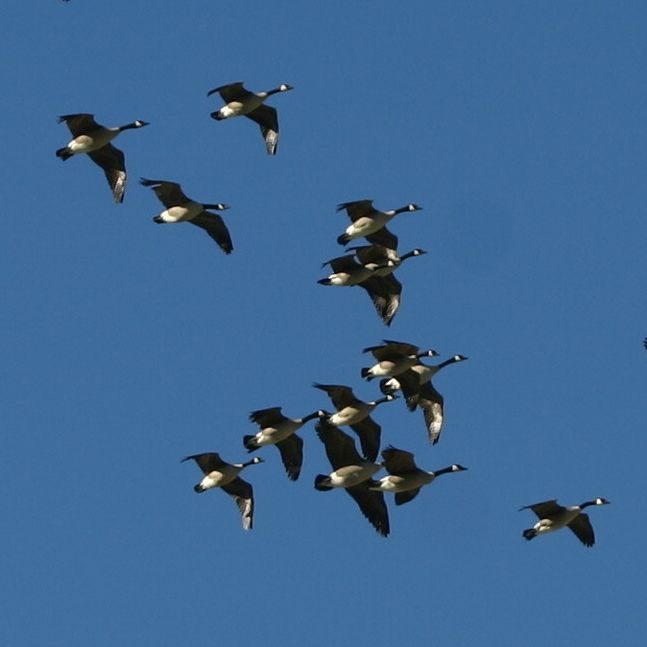
Goose hunters also look to be in good shape for this fall considering the number of warm winter layover geese that have increasingly populated remote farm ponds and surrounding crop fields over the last three years. We are finding mated pairs with nearly flight ready and in some cases limited flight capable goslings on small farm ponds that we have never found nesting geese on before.
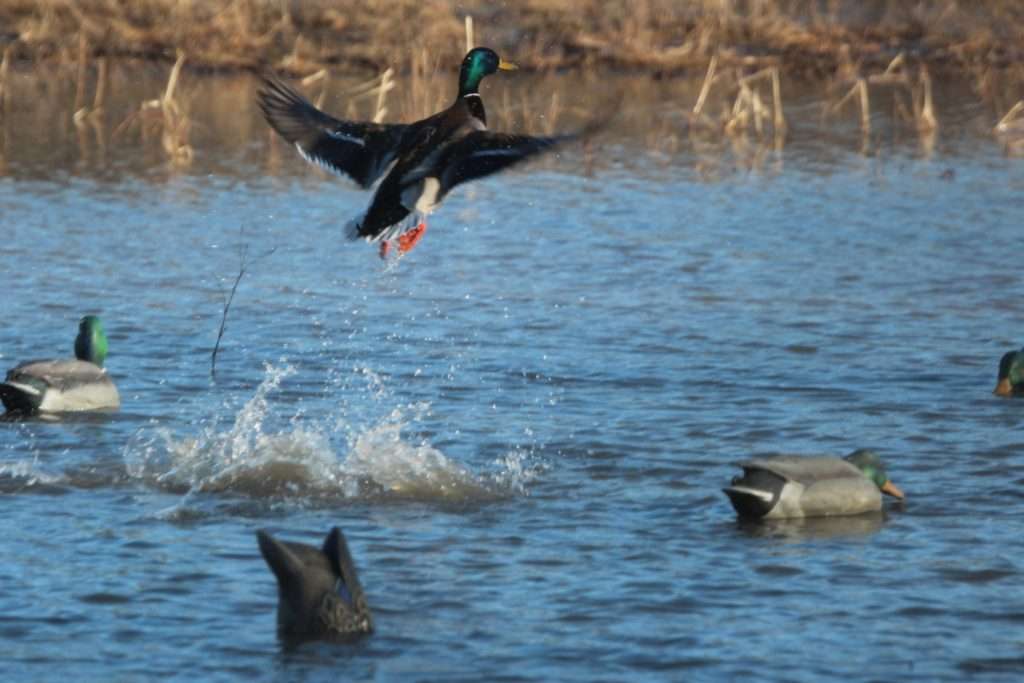
Considering ducks, is one lease that has a year round spring feed creek with pools that seem too small to hold the number Wood Ducks we find there each year. This creek is just one of those areas with all the right natural elements to produce a strong local population of woody's that has become a hallmark for us to gauge overall local duck nesting success. Later this summer we'll again make a trip specifically to walk that creek and count ducks.
25 Jun
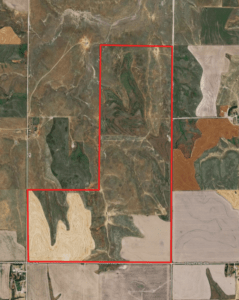
This picture is from a land run earlier in the spring just before turkey season. We leased it for two reasons mainly, the heavily wooded creek bottom with its soft edge and the crop ground around it. For deer and quail primarily, the turkey were on the far side split between our lease and the neighbor's ground.
The success ratio seems to be a little slimmer for many of the first year members as they are not as familiar with the different regions of land to choose from, but as the year’s pass their success rate seems to improve rapidly. 23 Jun
21 Jun
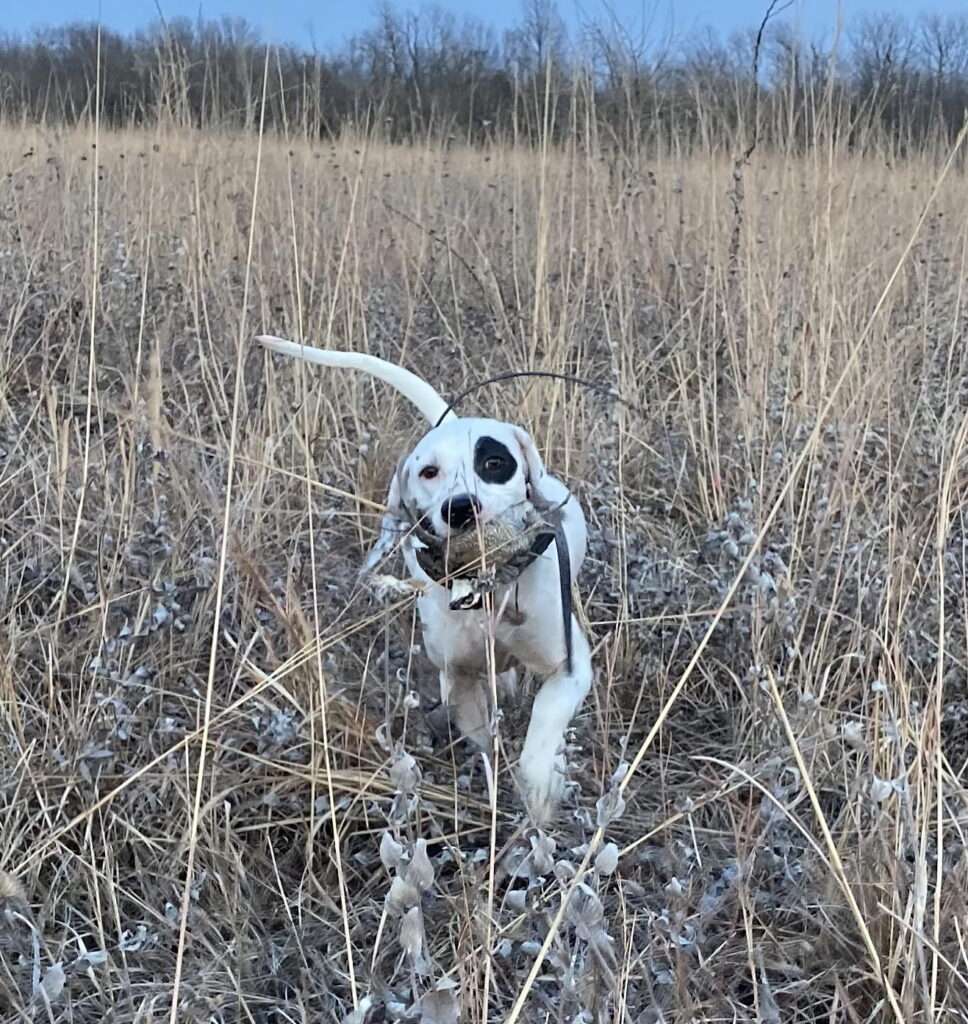
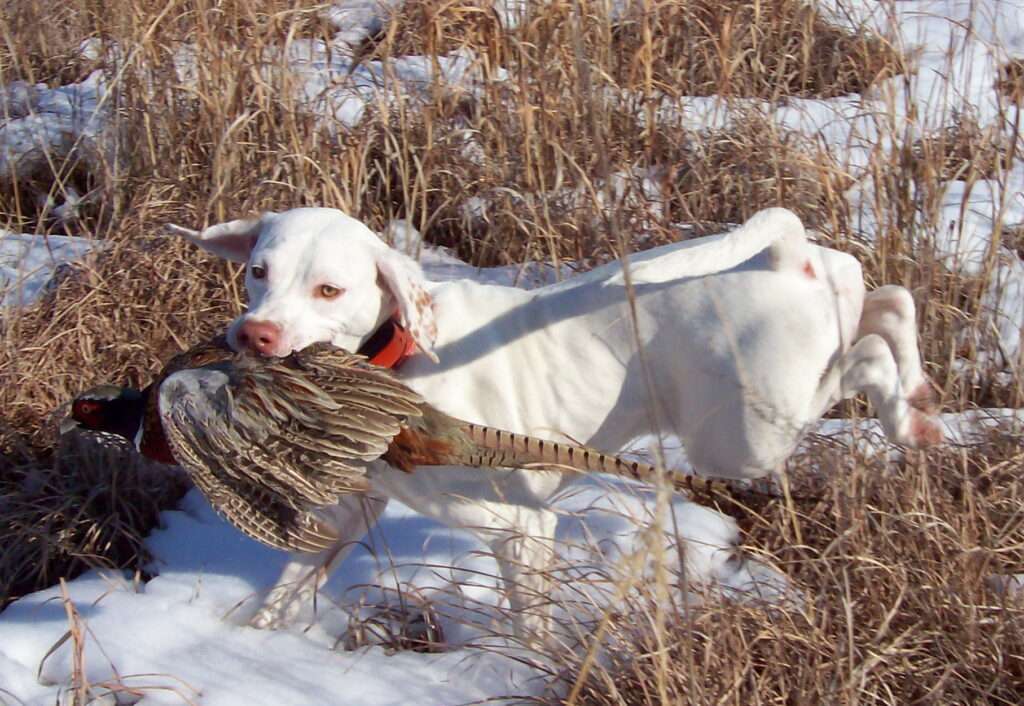
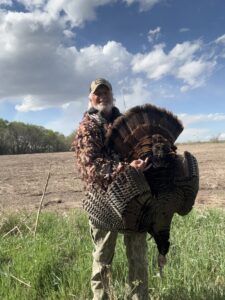
A hunter that started as a waterfowl primary interest, moved onto upland birds with a lab and now his first pointer and hunts spring turkey. Kenneth knows how to make the most of opportunity for he and his family. Another one of our military service members Kenneth is a fighter pilot currently stationed in Arizona. Never too much good can be said of our military hunters. Thanks Kenneth for the great picture and hunting story.
This is Bruce your Association wetlands manager with the two toms he followed up after the single back in April. We lost his email however we remember the quote: "Sometimes it just don't come easy." Bruce was referring to how he had to work for his birds this season. Or, he is a Ringo Starr fan after all he is from the 1960's hippy generation. At least that's our story. Congratulations Bruce and thank you for sending in the pictures.
Our answer to why we do not send out a paper newsletter to all about all issues: "We do not mail newsletters except as a last resort and for membership wide issues. In terms of the transfer deer tag, 25 or less each year apply through our landowner program and that amounts to too few members to spend the money on postage, paper and time to send out 840+ letters. We will limit its advertising to the, I suspect you know, on the website under the Kansas Deer Hunting section as well as you identified posted on the update page for those that frequent it. It is unfortunate you feel left out and we do not intend for anyone not to have parity with all others in the organization. I know this is not the answer you were looking for, but it is an honest answer."
The Association position is one of fiscal responsibility to limit overhead and apply as much money as possible to land contracts. Routine notification will remain to this update page.
Our answer: "In terms of you believing you would have the entire land access to yourself of any one county, unit of land or any one landowner is surprising to me as we make it very clear on the website and in our telephone interview it is one numbered/lettered property per hunter per day. Also, with only a membership payment of $875/year it is unrealistic to think that hundreds of acres will be available and exclusive to each member every day, a hunt trip or season. One of the strengths of the Association is the ability to move from property to property without any one hunter blocking large acreage from any other member. To have that amount of acreage exclusive to each member would drive membership dues into the thousands of dollars per year for each making membership unattainable to most."
The Association position is as it has always been the rules concerning land access have been with us a long time, tested and refined. They are set to ensure all members may hunt as often as they want to and have ample land each day to do so. We recognize this is the main reason members renew their memberships and that is our goal, that is, provide such a good hunting experience that members do renew.
Our response: "I fully agree with your desire to return and hunt the same area each year and do so myself. However, you may want to break out of unit [location deleted] as one of the reasons we limit our acreage in that unit is that we are getting better results in other units in Kansas. Right next door in unit [location deleted] and in [location deleted] we are harvesting far more trophy deer than what we believe unit [location deleted] has the potential to produce.
The Association position is that life is not perfect and we as all others must comply with state regulations. Yes, at this point the concerns have degraded into whining.
Your Association will combine last year's during the hunting season survey, this May and June's combined rainfall in terms of total accumulation, that which was over 1/4 per day, day versus night precipitation, the average May and June temperature and finally by the end of July we will have had enough time for eye's on the ground survey to have a fair assessment of where the better bird hunting will be. July is the month when the chicks have matured tot he point we get to see juvenile coveys fly and see pheasant chicks trailing hens.
To date the spring rains have not been great, at this point we are guessing they will be average overall. In some areas the rain fall accumulation is right at the break point between an up and down year in terms of spring hatch survival. Other regions we cover have been left out of the rain pattern and will need some to produce the better tall prairie grass cover. Concurrently, a traditionally good region has had an above desired rainfall. This current assessment leaves a lot of fringe areas between the different regions where rainfall accumulation variances in our three state area leaves near ideal conditions and those are the areas that will get our attention.
The current bird observations have been largely limited to Bobwhite calls in the morning and evening as well as the rooster pheasants continue to crow from first light and for the next 2 hours or so. For the amount of calling we are hearing, as one more indicator of population density, it appears we had a very good carry over adult population. This of course is a good sign and also incomplete as we can never rely solely on carry over as an indicator of good fall hunting.
As we continue to rebuild from the website hosting service debacle we are attempting to recapture all the May 2004 lost updates. We think we have more than half of them and will ask those that did send in May updates if those updates do not reappear within the next week or so on this page to please re-send them.
Also, if some updates appear to be repeats it is most likely due to having been part of the May update that was lost and recreated here to the best of our ability as many of them survived for a week or so before being lost.
One update we know for sure we lost even after it was sent to us twice was from Rhett Thompson an active duty Army officer assigned to Ft. Riley Kansas. While on deployment orders for Iraq he took a 4 hour morning hunt to harvest one tom. I cannot possible replicate the very poignant and frankly written account of how important it was for he as a service man to be facing yet another deployment to a war zone separating him from wife and newly born first child to have the opportunity on short notice and without planning to take a morning to get away from it all. Possibly many will read this as insignificant and to those people we turn our back. If we again get the opportunity to share what Rhett has written all will be impressed with how dedicated the service members are to supporting our nation. All the especially more important considering recent events.
Joshua does it for three years running. Read his web page for some detailed accounting of just how hunts actually are conducted.
Association bird hunters can readily attest to the large racked bucks they put up out of the tall prairie grass on many hunts. Deer hunters, especially those from out of state, frequently discount the tall prairie grass as any kind of deer habitat. Too often the out of state deer hunter seeks the habitat that approximates his home state deer grounds and becomes frustrated with the land, the Association and its staff for having recommended them to hunt wooded creek bottoms and such that do not meet the hunter's expectations. What the non resident deer hunter frequently fails to realize is the reason he travels to the mid-west is for its big deer and the habitat those big deer occupy and that habitat is the wooded creek bottom and tall prairie grass. It is the hunter that must adapt to the game and the land rather than the hunter seek the land to adapt to preconceived notions based on his definition of the world.
More about the quote cited above reflects the author's experience compared to that of your Association staff that lives 12 months of the year throughout the three state region. The author cites "CRP" ground. Your Association staff further sub-classifies CRP into that which is productive and that ground that is in the right region of the state as genetics are not necessarily state wide. Not all CRP is equal and that which we seek is that in the tall prairie grass and other features we will not describe in an open forum that combine into being more productive than other land planted into the Conservation Reserve Program as well as the buffer strip, riparian, WRP, tree, etc., programs.
A final point about that simple statement initially quoted above in the first paragraph is the gap left by the ..., which further stated: " ...south of Des Moines and into northern Missouri..." This further appears to reflect the article author's experience limits. That region he describes has far less CRP than Kansas for example. Just as in Iowa and Missouri the Kansas tall prairie grass holds plenty of deer as well. And once again, it is not simply tall grass that is important. The surrounding habitat of the neighboring farms impacts our decision of what to lease and what not to lease.
For most of us we recognize any magazine article reflects the limitations of one person. Your Association staff will remain focused on our three states and not seek specialized knowledge elsewhere. When we recommend a place to hunt it is not an accident. We seek to have our members renew their membership each year and getting all on game makes most of that happen. Our responsibility continues year round compared to a magazine article writer that once paid for the article has no responsibility. |