Kansas Bobwhite Quail hunting is on wild quail on natural terrain largely along grain crop field edges, waterways and the brushed in draws. Kansas' Bobwhite Quail populations will overlap in many areas with pheasant. Within the Mid-America Hunting Association the quail hunter is a minority segment of the membership allowing for many days in the field watching good dog work for those with the dog power, willingness to walk and shooting ability required of this demanding hunting discipline. Other favored hunter comments include more land to hunt each day than daylight hours to hunt and not having to cross their own tracks on any trip.
Kansas Quail Hunt

Kansas quail hunting is a well known upland bird of choice for resident Kansas quail hunters and a growing attraction to non-resident quail hunters largely due to enjoying Kansas' open quail hunting ground, mild temperatures, lack of snakes and cactus.
Kansas Mixed Quail and Pheasant Hunts

Kansas's mixed quail and pheasant regions rivals that of our southern Iowa properties as well. This is the difference between our southern Iowa and our Kansas quail hunting compared to that of Missouri. In these two states the potential to limit on both birds, pheasant and quail, in one day is far superior to that of the Missouri quail region. Between our do it yourself Iowa and Kansas quail hunting areas the difference is simply Kansas offers one more pheasant per day limit.
For Bobwhite Quail only hunts Kansas offers its SE region well outside of the Kansas pheasant population range and allowing for each point to be quail only.
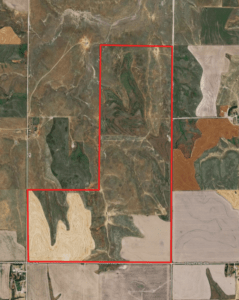
2013 Kansas hunting land available for quail hunts.

In several areas of this web site we cover quail dog power and how we cringe when a non-resident calls and says his interest is hunting wild Bobwhite Quail and he is traveling from a region of the country where the only quail his dog has pointed has been released quail, on open fields and under the best of weather. We will have a longer conversation with this hunter and explain what he may anticipate Kansas quail hunting with us.
In short what may be anticipated will be long runs of linear Kansas edge habitat where being on the up wind side is the wrong answer. Quartering dogs less efficient than habitat seeking long running dogs and shooting through trees more common than all else.
The best feedback we gain from Kansas hunters traveling in from states without wild Bobwhite Quail populations is the amount of bird action, dog work, shots fired, few quail bagged and what a great time it was. That type of quail hunter we will always want to work with.
While we will not repeat here the requirements and definitions for willingness to walk, wild quail shooting ability and quail dog power all should trust when they talk to us we will provide the information they need to develop decision criteria of if or where to quail hunt to ensure they have as good of a hunt as possible.
Kansas Quail Habitat

Quail flushing pictured during a late summer MAHA Kansas land run.
Much to talk about in this quail flush picture. The key elements, milo heads seen just above the brush, grass draw, plumb thicket that all equal some of the best Kansas Bobwhite Quail habitat to be found.
Milo is by far the favorite and predominate Kansas quail food. This can be tested by anyone with pen raised quail and place in that pen a selection of foods. The milo will be consumed before all others.
The next is the prairie grass that grows in these draws. It is of a quality that remains standing thought the winter providing low to the ground protective cover. It also serves very well as nesting cover. Two key aspects of grass cover that are required for perpetuation of a covey.
The last element is the plumb thicket, in this case the leafless tree looking bush. Anyone that has ever hunted central mid-west Bobwhite Quail knows to ensure their dogs cover every plumb thicket encountered. The plum provides year round overhead protective cover and the ground level is completely open allowing for very easy Bobwhite Quail foot movement for the entire covey to escape. And, that escape is a source of hunter frustration.
Plumb thickets mean the covey will flush to the far side leaving the solitary quail hunter frequently without sight of and only hearing the covey flushing out. Paired hunters will find much action.
The final element of the Kansas draw is the quail hunter will soon learn to flush the covey up and down the draw rather than out of it for much singles action. It is this habitat that may allow for 20 to 40 minutes of fast dog work from the covey flush to the the last single quail point.
When calling about our wild bobwhite hunting some hunters may find us encouraging they start their Kansas hunt within our pheasant predominate regions and work toward quail hunting during the latter part of their trip.
That trust and confidence in us is drawn from that we are a business not a hunting club and as a business we seek return customers. A good upland bird hunt of pheasant and or Bobwhite Quail will always bring hunters back for years of quail hunts to come.
Kansas quail hunting is largely along quail attracting food sources of milo and corn row crop fields and the brushy draw where open sky flushes are the expectation to offset the many wood line quail points accompanied by through the trees shooting.
While there will be some woods shooting for the most part the Kansas quail hunter will have little excuse for missed shots. This same quail habitat variety gives the bird dog hunter a chance to work his dog on different habitat during the same day. While quail hunting this type of habitat is attractive, Kansas offers another quail cover that will provide an extra bit of adventure to any quail hunting trip.
Kansas quail hunting is unique to our other states that in the southern regions where cattle pastures broken by sand hills and short plumb produce quail in numbers that surprise many. Most quail hunters drive by this type of habitat and discount this land as un-huntable or not bobwhite habitat. The contrary is the reality.
This is ideal quail dog watching habitat as the cover is thin and open. The small sand hills while numerous provide and long range observation that may cover as much as 80 acres at a time. While this terrain has much to offer it is not without consequences.
Beeper collars are a must in the Kansas sand hills quail country.
Kansas Sandhill Bobwhite Quail Country

When we talk of sand hills the word "hill" is often very deceptive to hunters.
Key points about this picture is first the dry land crop of wheat which is common in this Kansas quail hunting region as are the irrigation systems shown below for grain crops or in this case alfalfa.
These crop fields bring the winter, hunting season, food source to the cover habitat of the sand hills seen in the background (above) covered in low plum and grasses (spring/summer insect food source). What is deceptive about these hills in the picture is their height, at least twice as tall as the photographer, and they block the view
of the hills that continue beyond them for the 480 acres of this one parcel of a 3/4 section. The single hills themselves cover a good bit of square footage making walking around them longer than shotgun range.
It is common to be in sand hills and cross an adjoining fence line and be back on flat land. The sand hills rise up abruptly and cease just as quickly. Add this habitat variety to the Kansas brush/grass draw quail hunting that can be experienced on the same trip or day leaves the quail hunter with boredom prevention changes in scenery.
They are not required due to thickness of the short plumb or pasture grass, it is the small 10 to 20 foot high sand hills that will hide the dog on point. This brings the second consequence.
This kind of Kansas quail hunting is best done with one dog per hunter. Having two or more on the ground will eventually lead to the condition of two dogs on point widely dispersed and when the hunter goes to one that walk may take him out of earshot of the second beeper collar.
This Kansas quail hunting terrain is unlike a wooded edge area and seems to absorb rather than amplify the beeper collars. The soft sand soil and the numerous small hills conspire to hide both sight and sound. Add to it a wind unrestrained by trees and brush and that beeper collar that is able to be heard 400 yards away in Iowa is lost in the Kansas sand hills at a 100 yards.
This discussion on Kansas sand hills quail hunting is not intended to discourage any from our Kansas quail hunting. It should rather encourage all to try all the variety that exists for the adventure of something new rather than the same field or habitat type each Kansas quail hunting trip.