![]()
3 May Injury
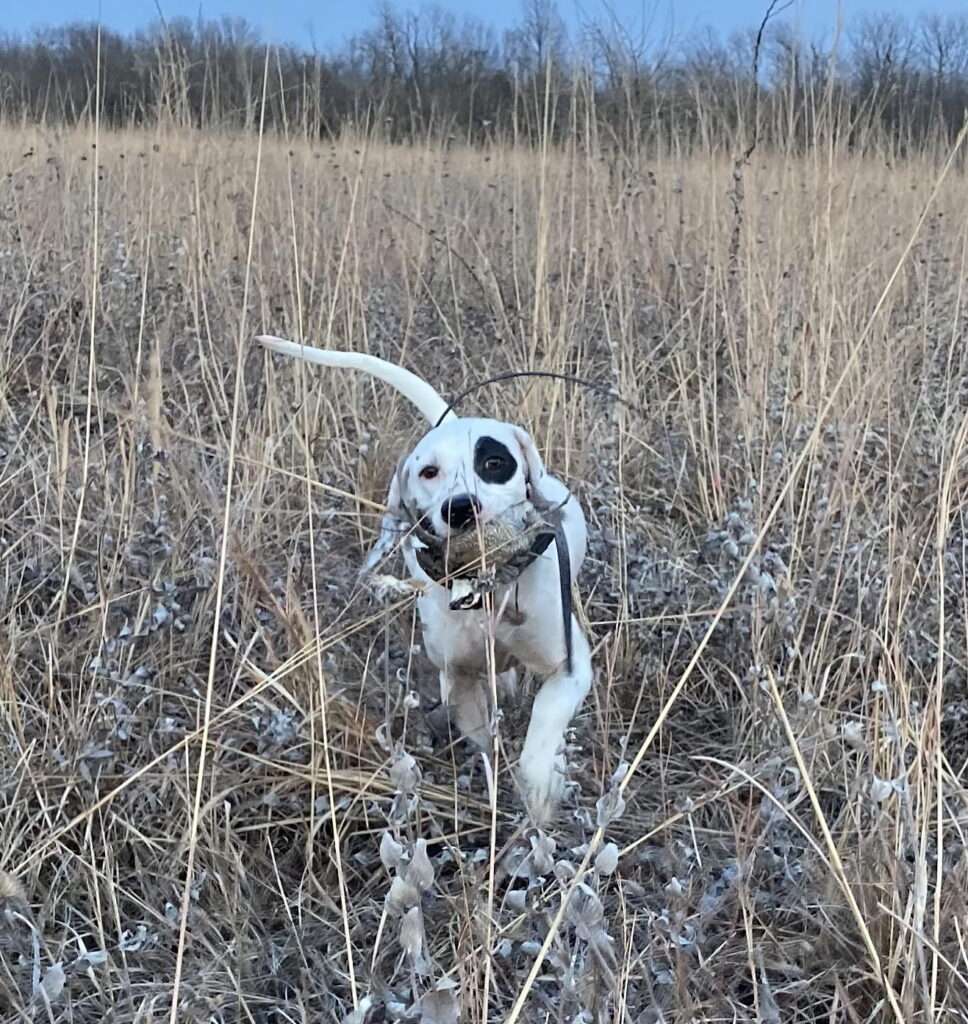
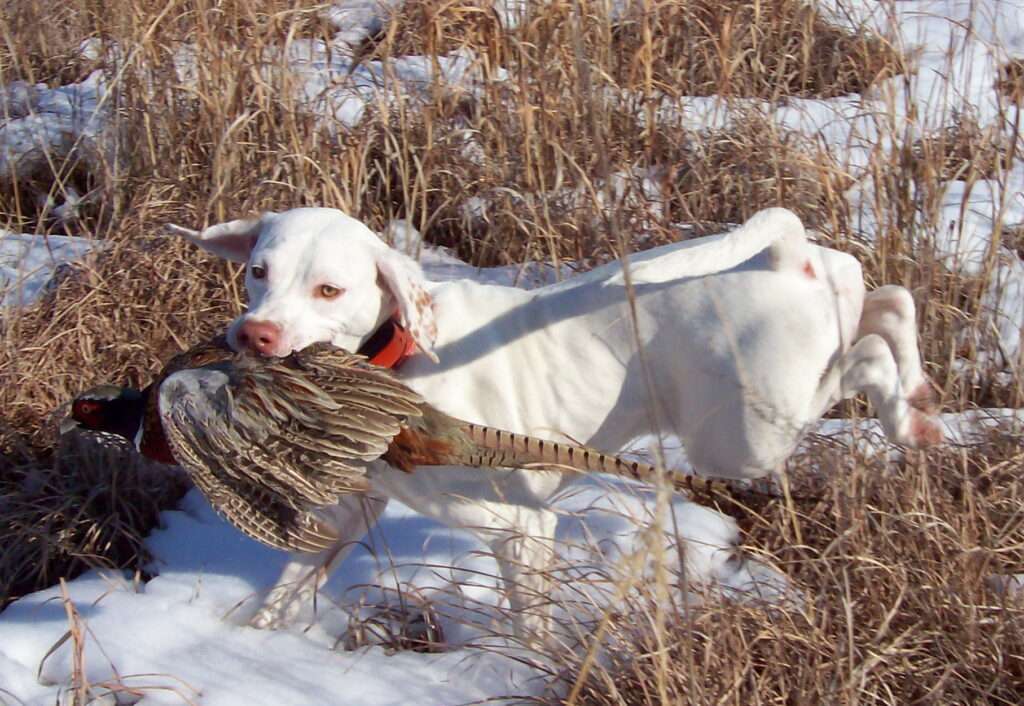
During a mid-January bird hunt a 40 pound, 2 1/2 year Brittany developed lameness in his left rear leg. Beyond the raised leg while walking or running the dog exhibited no other signs of injury. Assuming a common soft tissue leg strain the dog was rested the rest of that day. The next morning the dog exhibited the same level of lameness right out of the box and was not hunted for the next week.
During that first rest week the dog alternated from lameness to correct walking/running structure regardless of correlative events of in kennel, yard or house. After further rest the dog was hunted once more with similar results of alternating lameness and correct running structure. A further rest period, one week, yielded no improvement in performance. About this time or some time shortly there after a lump was found on the posterior side of the leg above the pad. The lump, a noticeable mass which fluctuated in size and firmness, gave rise to further concern to include a local veterinarian visit.
The local veterinarian aspirated liquid samples from the lump and made x-rays of the dog while sedated. The lump samples showed no abnormalities as did the x-rays, frontal, side and rear. Taking a precautionary approach the local veterinarian prescribed antibiotics in attempt to achieve observable results. None were achieved. The lump remained, the dog continued to exhibited periods of lameness and correct standing, walking and running postures and did not adversely react to manipulations of the affected foot, leg or lump.
By April with continuing lameness the local veterinarian recommend a visit to an orthopedic and surgery specialty clinic. Initial examination by ultra-sound, second aspiration of the lump and physical examination indicated a range of possible causes from torn ligament, to cancer, to simply they could not tell. The ultra-sound as did specialty doctor examination of the x-rays showed nothing to indicate the cause for the lameness. A second aspiration did yield inflammatory cells consistent with infection, and fibrous cells suggesting scar tissue. Because of the chronic (persistent intermittent lameness) nature of the injury, exploratory surgery was determined to be the best diagnostic course.
The surgery determined the cause as a tip of a honey locust thorn encapsulated by the dog's body inside a fibrous tissue mass. The entire mass and thorn were removed as it was detached from ligament and any other connective tissue within the leg. The dog was sutured and placed in a splint for a week to keep the suture area immobile as a healing enhancement. Ten days after surgery the dog was back to normal status showing only expected post surgery soreness.
Culture results from the thorn and mass revealed two types of bacteria, one of which was resistant to most common antibiotics. Both infections required follow up medications. What was unusual in this case was that a foreign object like this thorn did not create a draining tract of infection, or try to migrate out of the body. Instead it was walled-off from the rest of the body with scar tissue, preventing potential spread of potentially virulent bacteria which could lead to severe infection of joints, tendons, or bone. Such an infection can be career ending for a hunting dog.
We present this case as the worst yet recorded about honey locust thorn injuries. Thorn injuries are typically less frequent than soft tissue strains and more common than barbwire hide cuts. The common response of a dog's body to a thorn is through natural expression by what is commonly referred to as festering. Surgery for thorn removal is less common.
Read about two other hunting dog injuries: broken leg, accidental shooting.
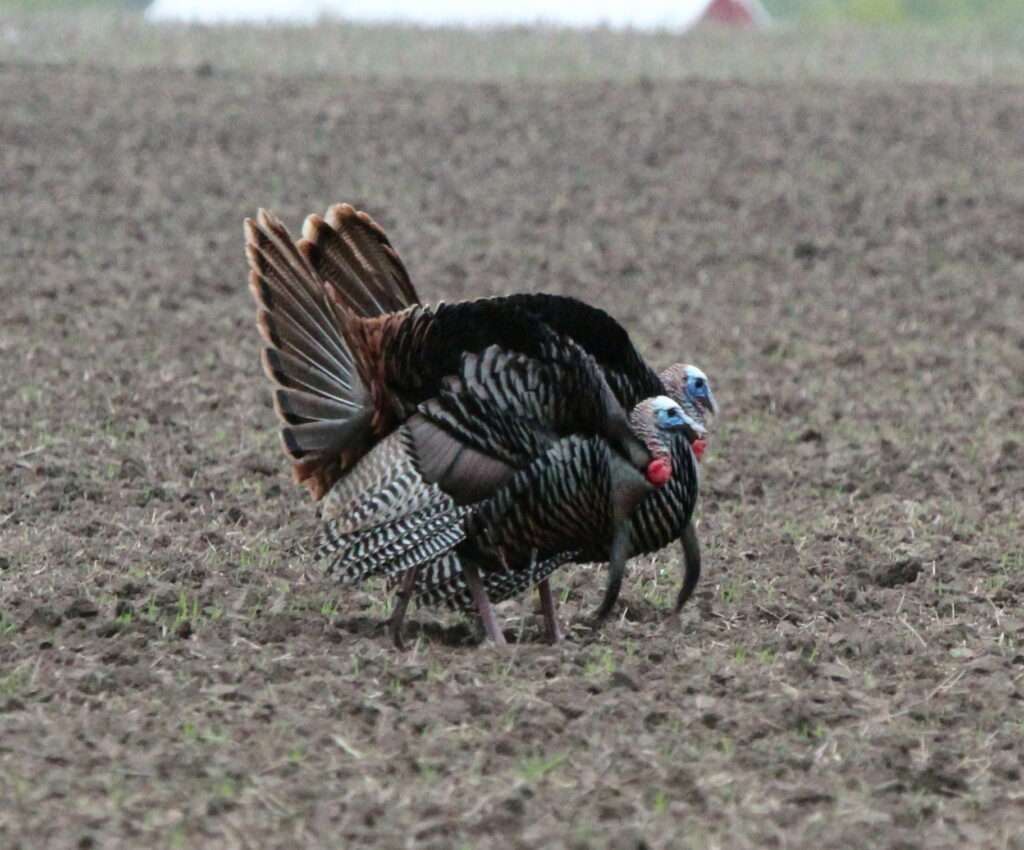
Recurring Success The Hard WayTwo well experienced turkey hunters harvest by bow.
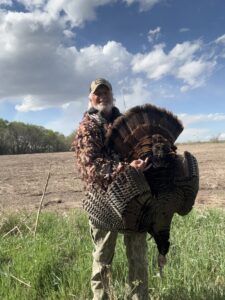
John 3d in [location deleted] paid off on Saturday, another great hunt. Got to hunt [location deleted] yesterday afternoon and this morning as Steve L tagged out yesterday around noon. Thanks again, Steve.
Thanks to Steve and Steve for a strong series of success pictures over the years. You two make what is very hard look very easy.
|
|
|
|