![]()
21 November Upland BirdsThe season to date has been depressed in two terms. The first has been weather, the second hunter pressure.
Up until 20 November the weather has been very warm. A typical good day was in the 50's with the highest readings in the 80's as late as 19 November. Accompanying these high temperatures has been dry and dusty conditions with no wind or far too much. The summary is that scenting conditions have been as tough as they ever have been over past years.
The second aspect of the depressed bird hunts is that the Association seasoned hunter has avoided the early season more so this year having been tempered to do so from the previous recent early seasons having similar warm/dry conditions.
All that seems to have changed the afternoon of 20 November with a cold front and long term forecast showing a cooling trend along with expected precipitation to include snowfall.
The poor early season scenting conditions, low hunter pressure and the welcomed cooling trend indicates that middle and probably continuing into late season to have strong bird numbers in Kansas and to a lesser extent Missouri and Iowa.
Bird Hunter FeedbackComments from Jason, a long time, multiple state bird hunter about his latest Kansas bird hunt.
"While I may spend the whole day outdoors rarely are they full hunting days. All the more so during the first part of the season. Being down to one dog further limits bird finds and that is fine with me as he is a very pleasant dog to hunt. Hardly give any commands, hunts for me and he is steady....
Haven't had the chance to hunt milo stubble in a long time and was quickly reminded of its value. Should have hunted more of it earlier. My dog certainly liked the pond we came across. Water was limited and because of the heat I doubled the amount of water I normally carry and he took it all down. This pond picture was one of those dead calm, increasingly warmer days...
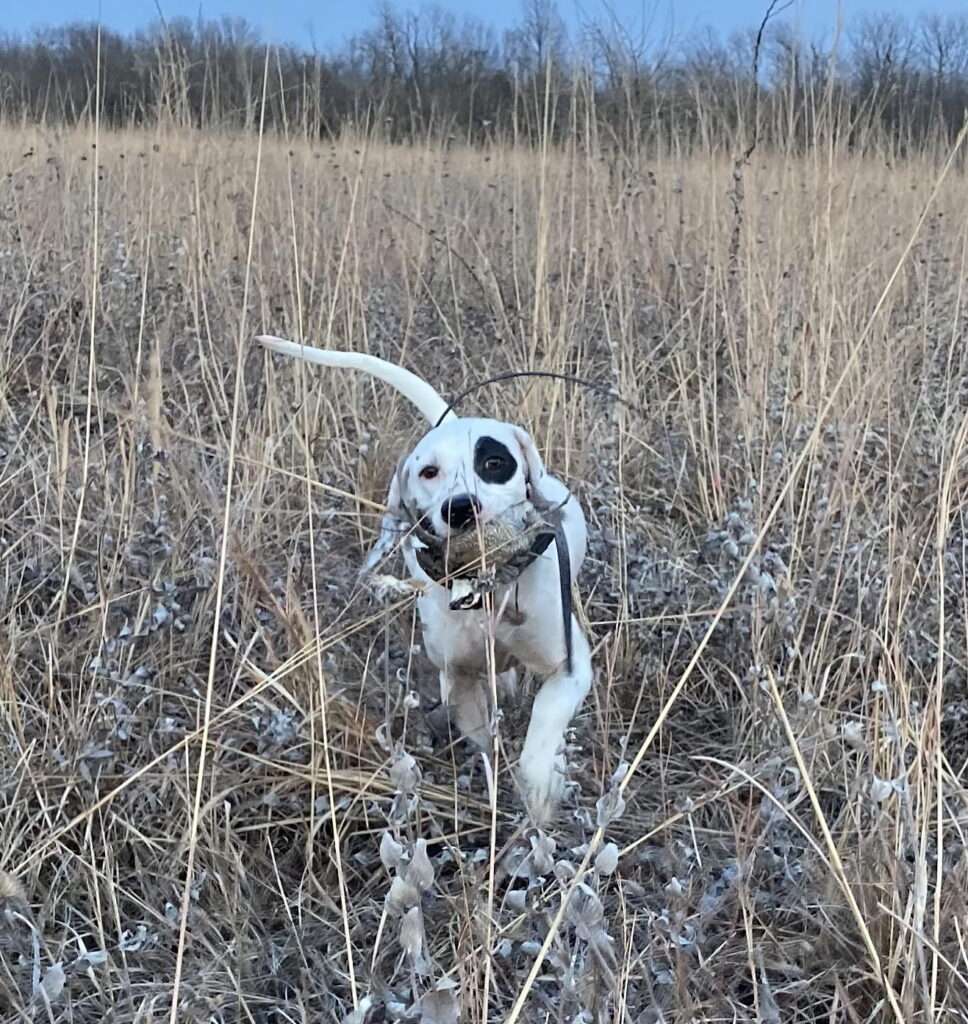
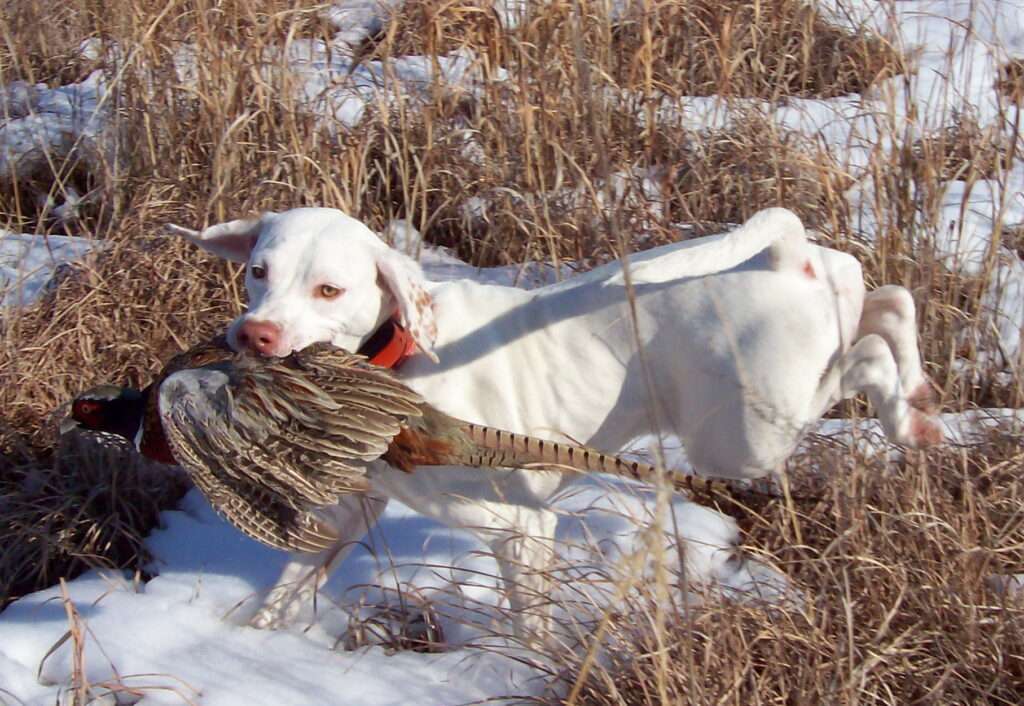
The birds came in one's, two's and three's per field. It was warm so I dressed them out after each field. I normally would not have sent in so many bird/dog pictures, however I know you appreciate them and others have told how they like the update page. When it turns cold I'll save up the day's bag for the limit pictures most folks like to see...
I'll offer the hunt in Jewell was disappointing. I was attracted to the idea of hunting new ground as I have been over just about every farm MAHA has. I would not send a new member or a first time Kansas hunter there. It worked for me as my little dog works slow and short. A long running dog would blow through the spotty cover and most likely push birds...
Over the years I have noticed how the grass in north Kansas is more variable than the more uniform cover in south Kansas. Each of these birds we worked for and on this northern Kansas tall grass hunt the birds either held in the better cover or ran in the thin grass. More than 2/3'ds of the birds we seen were run/wild flush birds...
The advantage we like in north Kansas is the chance to get out of the grass and hunt some edge, stubble and draws getting into quail...
The quail seem to be evolving into better survival strategies. The coveys like the plumb thickets. Some too thick to shoot when walking, crawling into flush. We went three and more points in a row sometimes without a shot...
From late morning through the PM my dog hunted shade as much as birds.
Thanks for all, JS."
Collective WisdomSome comments that stuck with us from this fall's hunters. On Deer "I pass on the smaller bucks." The response to our question of a four year member that has four well above average trophy whitetail of how he is able to achieve such consistent success.
From a Pennsylvania member commenting on how in Pennsylvania they see more spike bucks than any other rack size and how in our region they have not seen spike racks. His observation is that it must be more than genetics and it must be that out here they hunt over crop ground.
On Birds "Hunt the conditions and not the field." From a 10+ year member that always gives us good reports about his hunts. His point being that there is too much land to hunt the entire field. He looks at the wind, cover quality and food locations and hunts in those terms rarely covering an entire field.
Thank you to all that have been sending in the email and telephone reports. There certainly has been a wealth of it so far this year and it all adds up to better decisions later.
November 2007 page 1 2 3 4 5 6 7 8 9 10 12 13 14 15 16 17 18 |
|
|
|