![]()
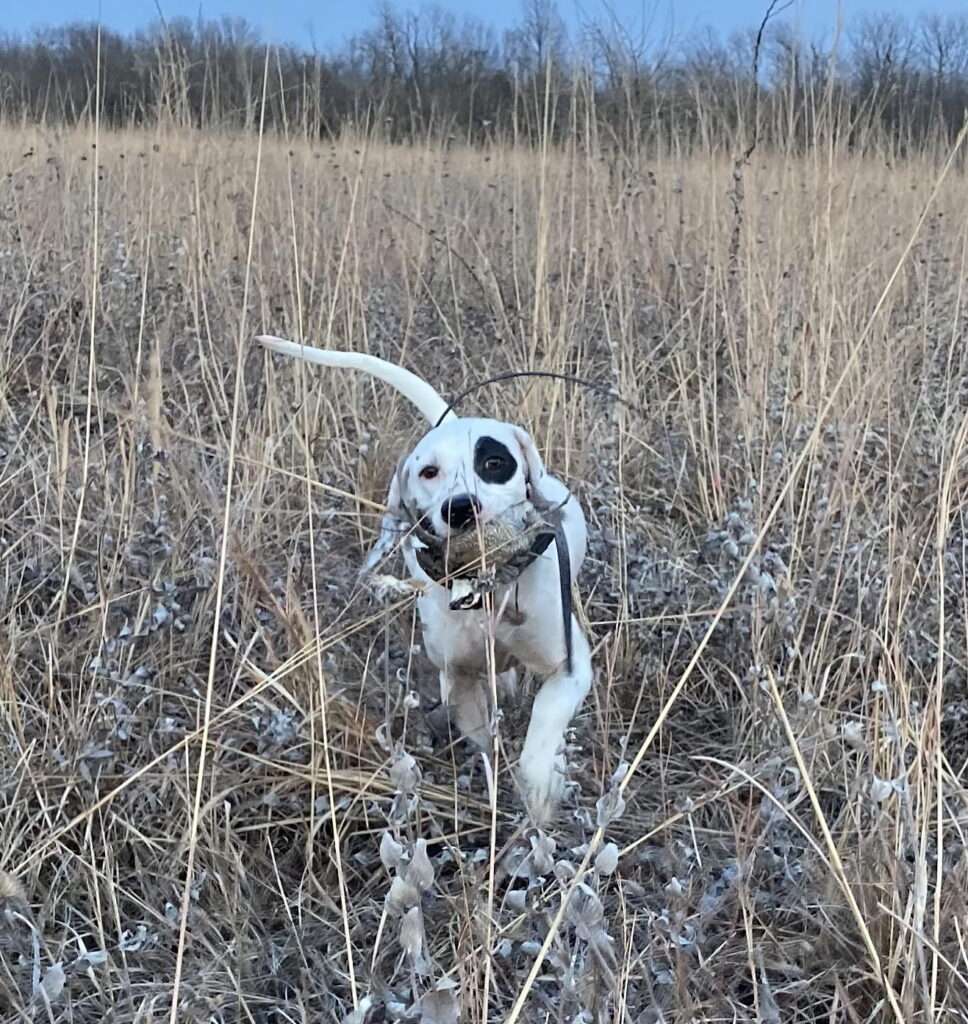
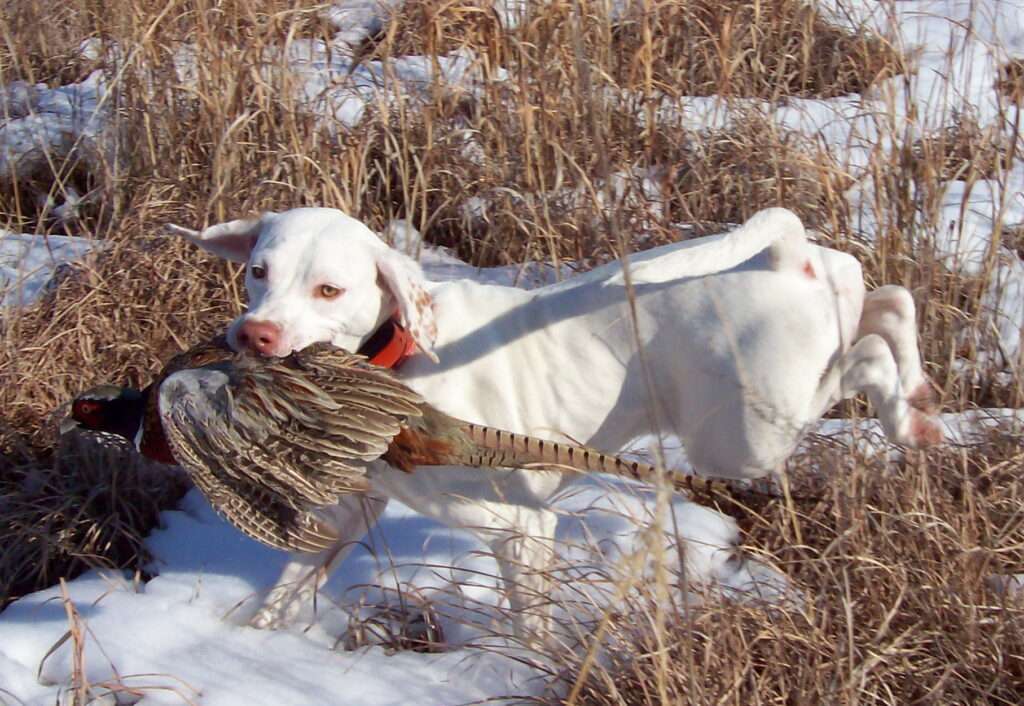
25 November PheasantSnapshots of some north central Kansas pheasant habitat. The grass habitat ranges from thin and short to tall and thick. The wide range of grass quality reflects the more sporadic and isolated summer rains of this region.
Two examples of grass quality, above and below. In each case a pheasant point.
The grass above is 160 contiguous acreage CRP field. It has taken three years for this field to reach this quality of warm season grass height and thickness. It is common for first year CRP to show little cover habitat value. Second year CRP quality is entirely dependent on soil and water quality. From the third year onwards the warm season grasses typically have the expansive deep roots structure to produce good to high quality cover habitat. Seven year plus CRP cover quality is dependent on local USDA/FSA/NRCS enforcement of contractual landowner maintenance actions. Those that have hunted Sherman County have seen first year CRP.
Below a filter strip that ran the drainages of a 240 acre row crop piece.
New fence being erected with the wire on the side of the CRP field. Most likely means that the CRP is coming out and being put to cattle pasture considering that it is a stout fence with a wood post after two steel. Why else fence in a CRP field? This picture is also from north central Kansas and fortunately not one of our leases.
According to agriculture reporting the Dakotas are the leading states with CRP acreage being returned to crop.
November 2007 page 1 2 3 4 5 6 7 8 9 10 11 12 13 14 16 17 18 |
|
|
|