October 2007 page 11 Updates

26 October

CRP

"...The Senate Ag Committee...unanimously approved its version of the next U.S. farm bill...Establishes an Open Fields initiative at $20 million per year...Continues the Conservation Reserve Program, as well as fully funding the Wetlands Reserve Program and the Grassland Reserve Program..."

Senate Ag Committee Clears Farm Bill, 10/25/2007, AgWeb.com Editors.


While this is good news what is not stated is that it will still require CRP payments to exceed farm crop profit margin per acre to replace CRP acreage not renewed, sustain current acreage and be incentive for new acreage enrollment. At the current time CRP payments in many locations do not meet or exceed farm crop production per acre profit margins.


On the positive side many corporate farmers seek farm subsidies of all types to include CRP as a means for diversified income and its accompany security of a guaranteed base line cash inflow. These corporate farms have the wherewithal to jump through the multitude of hoops the USDA/FSA requires for CRP enrollment and the acreage that makes it worthwhile to work the programs. Small farmers on the other hand are more typically time and resourced stressed with less acreage avaible for farm programs making the bottom line inflow payment less of an incentive for enrollment.


Now enters MAHA with our collective purchasing power of making attractive hunting rights contracts with large acreage owners that includes CRP. These type of corporate farmers do not have doors to knock on for the average hunter and in their business approach to land resources it is that any use will be by pay. It then becomes that the average hunter gains access to these large corporate farms with CRP through MAHA. And, our membership is largely of the average hunter with most having dogs, guns, bows, stands and other equipment that is far greater in cost than the annual MAHA membership let alone any private lease or land mortgage they may have as well. We know this is not news to current members. It is that over the years we have found the extent to which non-members including non-hunters read this update page.


25 October

Land

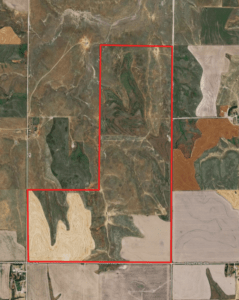
Some snapshots of the newly leased acreage in northwest Kansas upland bird country. The yellow signs are the Association's posting.

Both pictures above and below are of irrigated fields where the heart of the land is in well developed grain crop with corners in tall grass CRP. Many patches of side by side food and cover repeated many times over. Neighboring farms are of a mixture of crops with most non-irrigated. For those interested singularly in bird counts it is hard to beat this land very similar to south central Kansas and the large acreage in contiguous tall grass cover we lease. The similarity is it has the same monotony of habitat as the large acreage tall grass.


For those that more enjoy dog work over a variety of habitat this area is good for a day or two then move on to brush draws and wooded drainages for some quail and other pheasant cover. That distinction is similar to our prohibition against day hunts and our approach to season long hunts. The day hunters would sweep this type of cover regularly over pressuring the birds. Season long hunters of their own bird dogs seek that special satisfaction of watching their dogs work and that satisfaction is multiplied when experienced over a variety of habitat. Those are who we choose to work with and why some telephone inquires from some bird hunters are over in 30 seconds. Upland bird hunters continue to be our largest category of rejected membership applications.


For new members, one hunt approach that has received good reviews post hunt is to first travel to the MAHA regional location of bird and habitat of preference. Use that as a starting point for the first couple days of the hunt. After that, start a slow roundabout travel back towards home hunting one or two other regions of varying habitat and bird densities. Most will find that one regional bird predominance and or habitat type more suited to their dog power and hunting style. That is the point to pick up on for the next trip and so on.


For those heading down to south central Kansas the tall grass is of the best quality to be expected. This was also a good farm year with surplus spring deep soil moisture and a cool summer compared to average.

For any one that have not yet hunted large acreage tall grass this field may appear indistinct. Those experienced in tall grass hunts will immediately on seeing this picture start to make assessments on the variable quality of the grass seen in this one picture alone. That is the fun of the tall grass hunt, getting as smart as the birds as where they will be.


Hunters quickly distinguish this tall grass skill between those that hunt such fields in uniform patterns to those that hunt relative to grass conditions, wind and dog. That is one more difference between the day hunter focused only on birds in the bag and the hunter that truly enjoys his dogs. No surprise in this to many and seemingly inconsequential to some and in all cases part of our collective strength.

Key element to accompany any tall grass cover is a food source. In this case as prime as it gets, that is a cut milo field to the right.

Open country sign posting is always a challenge. Trust our maps and count road miles from known landmarks seen on the ground and on the issued maps.

From Greensburg and this spring's tornado. That is the courthouse brick and cement wall with tornado driven martial stuck in the wall. The tornado covered 9 square miles. There is much more hunting outside of that narrow band of destruction. Plan to stay in the nearby towns as only one motel remains in Greensburg and construction companies have rooms booked long term.


Thank You

We are proud that we can earn such written acclamation from such a seasoned hunter and humbled to continue our effort the best we can. Thank you Bill and good luck.


October 2007 Updates page 1 2 3 4 5 6 7 8 9 10 12 13 14


Update Archive


Kansas

Iowa

Missouri


Deer

Turkey

Upland Bird

Waterfowl

Home