![]()
27 Sep
Teal are consistent every year. The office gets one call after another before the season wanting to know where the hot spots are. We're baffled to respond because it's impossible to pattern these birds from the office. Year after year a handful of members put in the time to scout, hunt hard and enjoy great success in return for their efforts. This September has been very warm and windy which has made the teal hunting spotty but members like Andrew Nantz always seem to find a way to start out on a good note.
For example, during the early muzzleloader season everyone sent in their tags except 1 group of three non-residents. We requested the tags three times and like the old story the check is in the mail it was put off until the day before the hunt and was supposed to arrive by fax and never did. Another example is members using doe permits to utilize prime spots during peak periods
22 Sep
We know many of you have let us know of your availability and we simply have not been able to call everybody just yet. We have your names and numbers listed and hope to give everybody a chance to participate.
15 Sep
Via email: "Finally got a picture of one of the 12 pts buck I had seen while scouting. I thought the one I saw earlier was a little wider and taller, but it is hard to tell sometimes and this may be a different buck than I had seen. By looking at the picture he may or may not make B&C, it may be close, depending on the amount of deductions. He does look like he has a split G2 making him a 13 pt and adding a little more to the deductions. I'll do my best to get him and then I'll let you know what he scores." A note about how Steve scores his deer from past harvests is that he is an honest scorer. Deer he has harvested and scored himself in the 150's would probably be scored in the 160's by many others. A lot of us do not get a chance to see a big deer and the pictures Steve provides show us what a quality buck is all about.
We have seen over the last several decades many small acreage outfitters come and go. The small outfitter of around 10,000 acres or less has always operated in Kansas and Missouri and since the advent of the non-resident Kansas deer tag the small operator has doubled in number. The typical sequence is the small acreage outfitter gathers up land from neighbors, promises a big pay out for land and then slowly disintegrates as clients rarely return and the search for new hunters often exceeds the capability of the outfitter. The result that impacts MAHA is that these same landowners we compete for want the excessive amounts per acre lease the small outfitter promised for land leases and failed to provide. This scenario is played out in every region we lease land almost every year. The Kansas non-resident deer tag has also influenced landowners. The talk around any country coffee house is the tags are bringing in $2,500 and the landowner/farmer sees this amount as what every outfitter is gaining from every hunter and wants more for his land lease because of it. The landowner believes all pay-to-hunt organizations are getting that amount for all their hunters, figures how many hunters his land will support and then wants more than 1/2 that amount for the lease. This of course inflates the cost of land beyond what we can afford to pay. The cost of land has significantly increased over the past several year. An actual example is the farm within 2 hours drive of Kansas City one of your MAHA staffers purchased in 1996 for $750 per acre. Recent sales within several miles have been $1,400/acre for 80 acres of all creek bottom, $2,200/acre for 40 acres of hay ground on blacktop and 10 acre country home sites are costing $3,400/acre on acreage 300 feet wide and 10 acres deep. Another increasing cost has been property taxes. The same farm afore mentioned cost $716 for the entire year in 1996 and the 2002 taxes increased to $2,176. Other examples of land cost increases due to hunting competition include north Missouri woodlots that have increased in cost to $800/acre and expectations are that a $1,000/acre is not too far off in the future. No one 10 years ago ever thought the scrubby woodlots of Missouri would bring even $300 an acre at any time. Duck leases and wetlands purchases continue to lead amongst all land costs. This is a part of the country where swamp land is prime real estate. Wetlands within the three sub-basins of the lower Missouri River basin command up to $2,000/acre. Our federal government pays up to $700/acre just to develop the wetlands. That $700 often translates into a substantially greater increase to the landowner's potential sale value far in excess of that $700/acre free work he just gained. Developing wetlands is also a great risk as no matter how good the wetlands may look to the human eye they do not always attract ducks. Location being the primary factor. The final analysis is that costs increase over time and so will the MAHA membership this year. We will add up the costs of our leases and adjust accordingly. More to follow. 6 Sep
Unlike last season when the Association had zero Mule Deer hunters this season 4 members have tags in our best units. We certainly hope to see some good harvest photos this year. 5 Sep
4 Sep
This is the time of the year when in the free time between land runs to inspect and possibly renew or initiate new land contracts the MAHA staff works on wetlands. While the updates like this and similar waterfowl updates in the previous month may seem like an over emphasis on effort for our duck and goose hunters it really demonstrates how much easier it is to show our wetlands and waterfowl hunting areas compared to showing a picture of a woodlot for deer hunters. With a woodlot all that can be seen is trees. This stand of Smart Weed clearly shows this will be a good duck spot this fall. 1 Sep
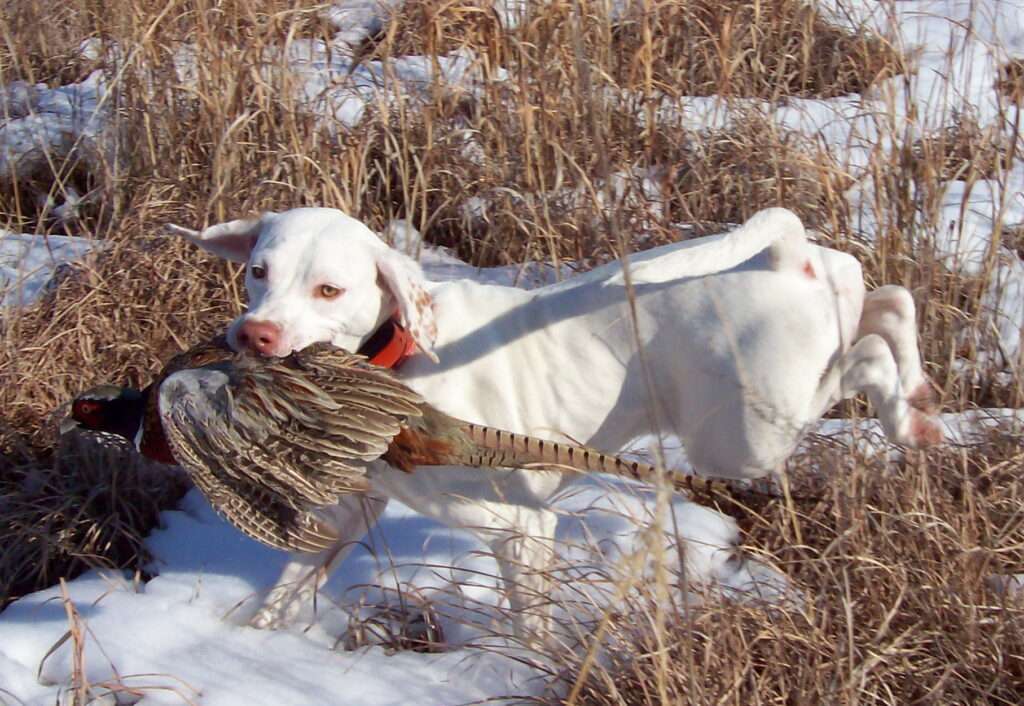
Partridge Pea is farm friendly as a non-pioneering native plant and as a legume it adds nitrogen to the soil. It grows well in acid soils common to waste or weed areas. It requires no fertilizer, herbicide or pesticide and is easily grown simply by placing seeds 1/4 inch into the soil. It is also a winter germinator allowing for year round planting by upland hunters during the hunting season on land they find coveys or roosters as a means of giving back some from what is taken. This particular stand of Partridge Pea is grown by one of your Association staff members that runs the good looking setters and enjoys increasing the bird population through habitat enhancement.
We are a long ways from online 24/7 reservations as parity for all will remain with the Association. Not all members have internet access and a good portion that do it is for their children and not themselves. Having equal access to all land by all will remain the standard. For those that attempt special favor or demonstrate an inability to comply with Association rules of making reservations or any other they simply are added to our "watch list". These are the folks we do apply special treatment to. Why the telephones are transferred during this time of year is to address the landowner contracts we push hard to close this time of year. Land contracting may appear to be a clean easy process and the reality is far from that. We must avail ourselves both early and late to accommodate the landowner/farmer schedule. Breakfast, lunch and dinner for may we deal with is 5-6AM, 11AM through 1PM and 9 - 11PM. Theses are the periods when many are close to a telephone and we are at the busiest. |