Spring Season Wild Turkey Hunting

Choices

Turkey Hunting

Iowa Turkey

Kansas Turkey

Missouri Turkey

Interests

Not Turkey

Administrative

Costs

Lease Land

DIY Hunts

Updates

Hunt w/Us

Home

Land

What most like about our spring turkey hunting is the availability of our private lease land in two states that offer liberal spring season hunting and over the counter tags. But, mostly it is our land and its turkey hunting that attracts our hunters.

It is all 100% private land we lease for our exclusive hunting use and we lease for the habitat of the predominate wildlife within the particular regions of the state where we do lease land. In this case we are talking about some of the best spring wild turkey hunting land to be found in one of the top turkey hunting states, Missouri, as well as two sister states of Iowa and Kansas.

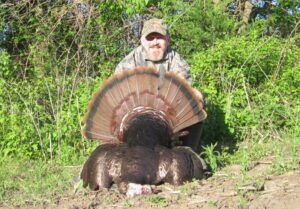
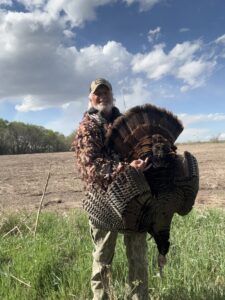
One of many fine do it yourself MAHA spring turkey hunters that send in their pictures.

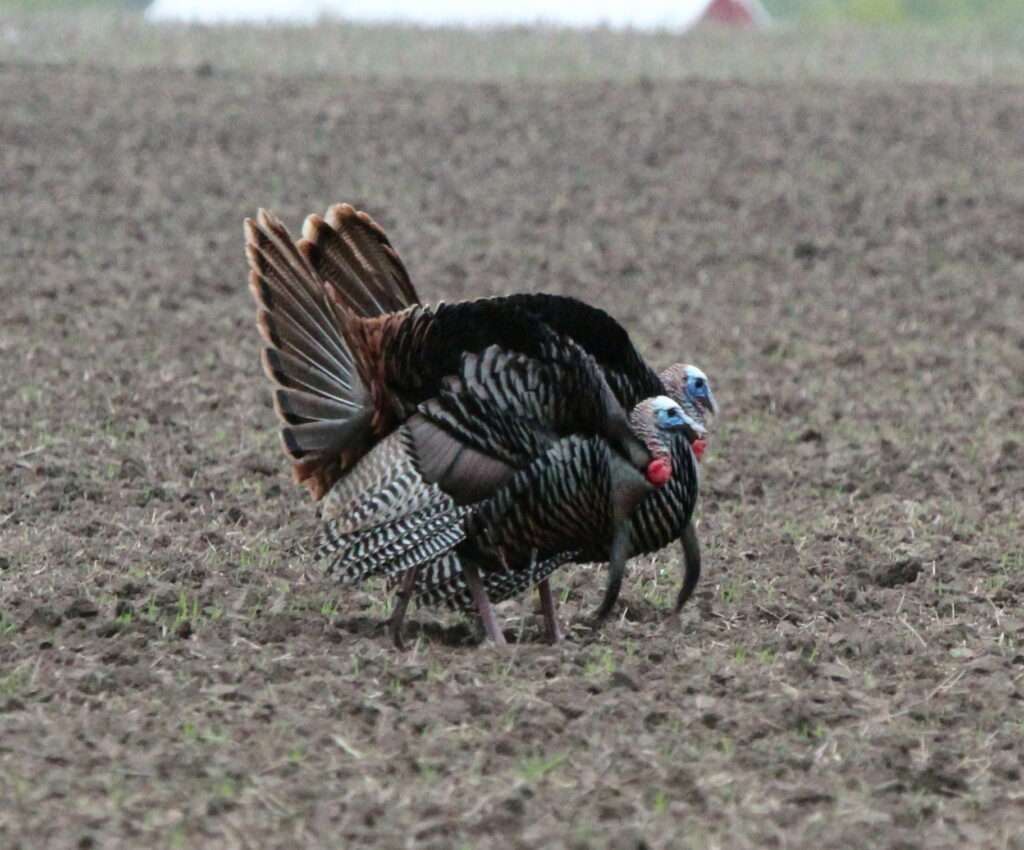
3 beard tom-11.5", 9.5" and 7.5" with 1/2" spurs - one nice spring turkey

When looking over our hunting lease land location maps it is readily apparent we have acreage concentrated in several regions while ignoring others. The difference is recognizing the terrain differences and the habitat variance along with accompanying and varying wild turkey population densities.

In Missouri, we pretty much stay out of the Ozark Mountains due to far too much wooded ground and too little farm ground. The significants is that most will readily agree that when it comes to nature and turkey hutning it is first all about food and then reproduction second. In the agricultural zone where 50 to 55% of land use is farmed the turkeys have plenty of food. Their cover and roost needs are also well provided for with the numerous tree lined creek bottoms as well as the timbered ridges separating the river valleys.

One aspect many big woods turkey hunters find most challenging first and then gratifying later is the fact that eyes on scouting/hunts rather than call and listen techniques predominate. While the big woods hunter will frequently hear his toms far more often and for longer periods than see them the converse is far more frequent in Missouri with its large farm fields. The story we frequently hear from such big woods hunters on their first central mid-west hunt is that which most impresses them with their hunts. That aspect is the length of time they were able to watch their tom come into decoy and call. The hunt accounts tell of how agonizingly slow the tom would come in. How toms would hang up just out of range. And, how exciting it was to be able for the first time watch what a tom does when he is working a hunter's setup and call.

In terms of our spring turkey hunting the flocks will be working the previous year’s row crop fields as readily as grazing on the quick to green up wheat and alfalfa fields.

So often we hear from those that read our website looking for spring turkey hunting information that they find more than anticipated and well beyond turkey season dates and tag limitations. This picture is just such a case.

Pictured is a pasture burning and turkey habitat development as an unintended landowner secondary effect. The primary effect is the reduction of wood growth leaving the ground clear for pasture grass. The reason this is good for nearby turkeys is that the fire burn is low temperature grass fire that kills and leaves behind bugs and grubs easy for the birds to find. The grass re-growth of tender short leaves is exactly the prime grazing they prefer. Any tom harvested near a burn field in green up is likely to have a crop full of greens.

In Kansas the better turkey regions are in the watersheds as opposed to the higher ground called the Sand, Flint, Smoky Hills etc. Hills that is, as best as Kansas can produce which are far less in height than elsewhere in the country.