Spring Turkey Season

Choices

Iowa Spring Hunts

Kansas Turkey

Missouri Turkey

Interests

Not Turkey Experts

Turkey Habitat

Administrative

Costs

Lease Land

Self Guided Hunts

Home

Continued

The difference between the watersheds and the hills is soil composition and depth. A geographic distinction between less and better spring season turkey hunts.

When the glaciers came through the Great Plains they scalped the high ground clean of soil and left it to the watersheds and where the better turkey cover is found. It is within the watersheds that Kansas has row and forage crop farms as the soil is rich and thick. It is in the hills the soil is thin and cattle is the cash crop.

The significants to spring turkey season is that where there is row and forage crop there is food and where there is better soil there is cover habitat to include stands of roost trees and tall grass prairie for nesting. The right combination of turkey habitat within a small area making for regions of the better turkey hunting. Especially that of nesting cover for the better spring turkey season hunts.

That one aspect alone of knowing where to turkey hunt takes away much of the mystery for the traveling turkey hunter. We have such a vested interest as we are a paid hunt operation that requires return hunters for basic business survival. To get that return hunter requires good turkey hunting. That is good wild turkey hunting both fall and spring season. This money approach does not lessen the turkey hunting experience it assures a good experience. That is the difference between a business approach and the good ol' boys hunt'n club.

It is the nesting habitat along with the food supply that makes for the residential nature of our flocks. Without both the sustainability of the flock is jeopardized. Roost trees are a secondary concern and the flocks will find the best available and make the best of what is available in terms of roost trees. That is as long as there is food and nesting cover.

We will tell a lot of our approach to wild turkey hunts through pictures such as this that shows game in the habitat they occupy.

While this is only a hen the purpose of the picture is to show the crop growth during the late portion of the long Kansas spring season. This is a corn field. Also notice how thick the cover vegetation is. The final theme is how many more pictures of open ground birds we have over that of within wooded areas. This open ground is where most of the harvests occur.

Wild Hunt Choices

For selecting where to go for spring turkey hunting is first to select between the species of the two we offer that delineates where to hunt. We have both the Eastern and Rio Grande to chose from or hunt both and do so on the same trip.

After selecting the species then comes the options of where in the states we lease land of where to hunt. The choices cover a good bit of ground and habitat types. The Rios in central and western Kansas and the Easterns in eastern Kansas and all of Missouri. And it is the habitat that most throws folks, especially spring turkey season hunters.

The challenge most spring wild turkey hunters face is they are accustomed to finding the birds in large stands of trees. This expectation frequently follows the hunter when traveling to the Great Plains to hunt and forgetting what it means to be on the Great Plains.

The Great Plains means a lot of efficient agriculture on flat land that has a roll to it and large tree stands are non-existent, at least those stands that compare to Minnesota, New York, Alabama, Florida, etc. At this point the hunter is going to have to trust us that we will get them on wild birds. That trust is not based on these words. It comes from the understanding that we seek our hunters to return and renew their membership every year for years to come, and that happens, it happens a lot. The reason is that hunters that have good hunts come back. That is no small point and includes many hunters that did not fill all available tags.

That is what we work towards. Trust us that when we recommend where to hunt that it is a good spot. That trust is recognition of our motivation for membership renewal over all else.

Continuing this article will reveal what many successful hunters have give n to us a formula for success. A priority of work with constraints that make scouting and hunting trips more effective.

By mid March each spring gobbling and the preliminary breeding season behaviors begin reliably enough to make scouting pay off for a later in the spring hunt. These pictures are from March 14 while on a north central Kansas land run.

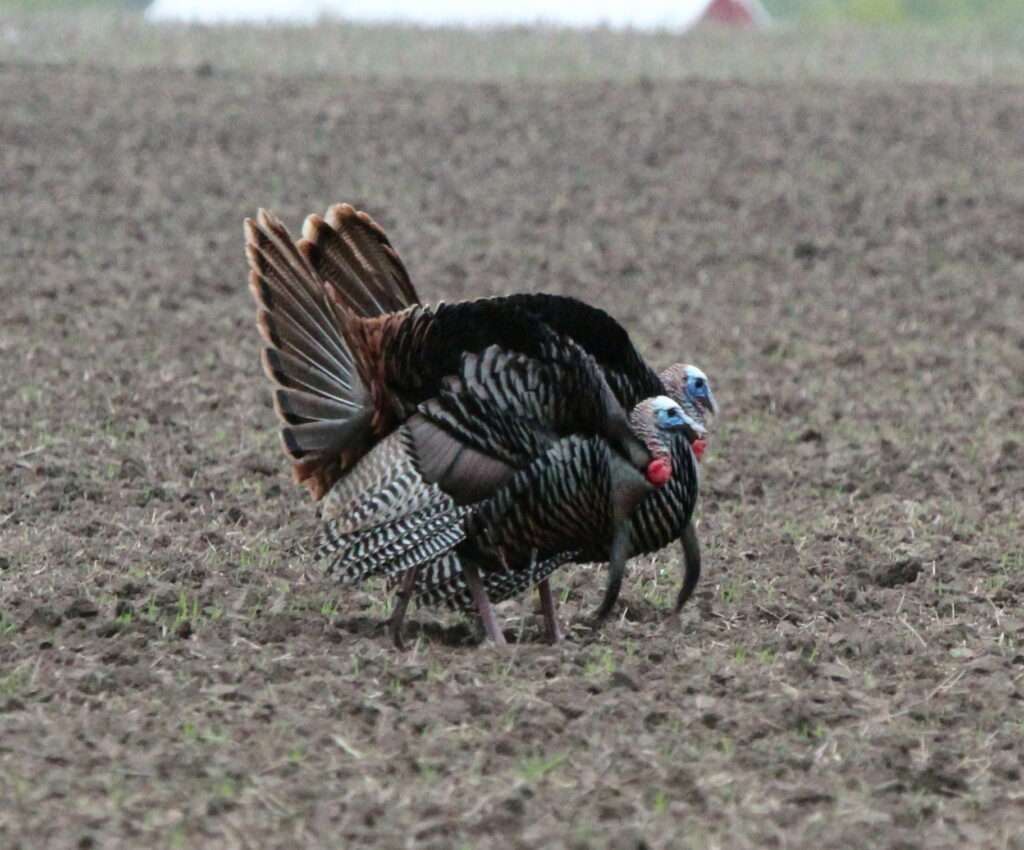
Strutting toms with a flock of hens leading them across the field. The hens are ignoring the toms that seem to be strutting as much for their own pecking order as for the hens. Morning gobbling while not strong is regular by mid March. The roosts at this time seem well set for the rest of the breeding season.

The same flock with a more panoramic view of the surrounding habitat. Last year's corn field already worked this spring with a field cultivator. The small wooded bluff is over an intermittent tributary to a larger creek system that eventually leads to a mid sized river that feeds into the Kansas River.


Continue our spring turkey season discussion