Wetlands 5

Choices

Goose Hunting

Missouri Duck

Duck Hunting

Wetlands

Administrative

Costs

About us

Hunt w/Us

Updates

Maps

Many of our wetlands are natural sloughs and bogs with shallow water habitat. Many of these hold water year around, but when a severe drought sets in a few dry up which is prime time to plant feed for the ducks as illustrated by the photos below.

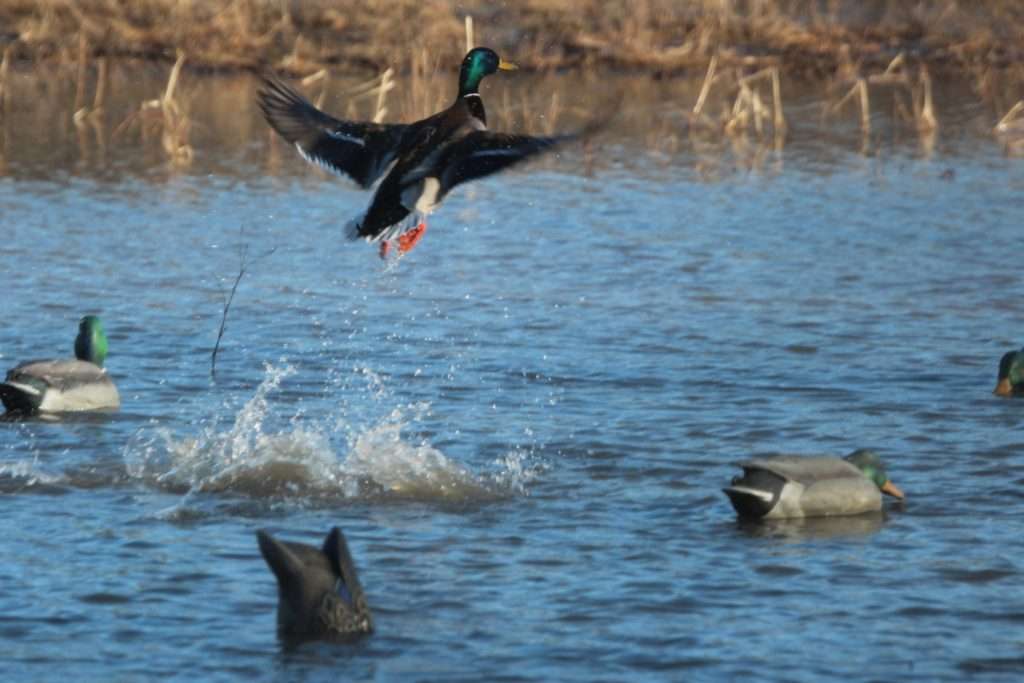
Mallards with a handful of gadwall mixed in.


This is a natural bog in the middle of an area that has been developed for high demand expensive private land duck hunting. At the snap of your fingers, this marsh has been known to fill up out of nowhere, until one day Bruce and Jon discovered the water source. There is a massive log jam on the river a couple hundreds yards south of the property. When the river runs, water builds up and backs into a cut from the river to the marsh. Since the lake bed is 2 to 3 feet lower than the cut or ditch, the water remains in the slough after the water in the cut recedes.


Nine out of ten years the marsh will have natural water, while the adjoining duck clubs are lucky to have water without pumping 3 to 4 years out of ten.
 

A day when the ducks were in and working MAHA wetlands big time. Days like this are few and far, but you have to be there to make it happen.


The lease on this farm started in 1982 as a deer and quail lease, but after we discovered what we had to work with the work began. At that time, the slough was choked with ash, cottonwood, willow trees and water brush. After two summers of clearing trees and brush by hand, we developed a marsh that has been enjoyed by Association duck hunters for 25 years.

1 2 3 4 6 7